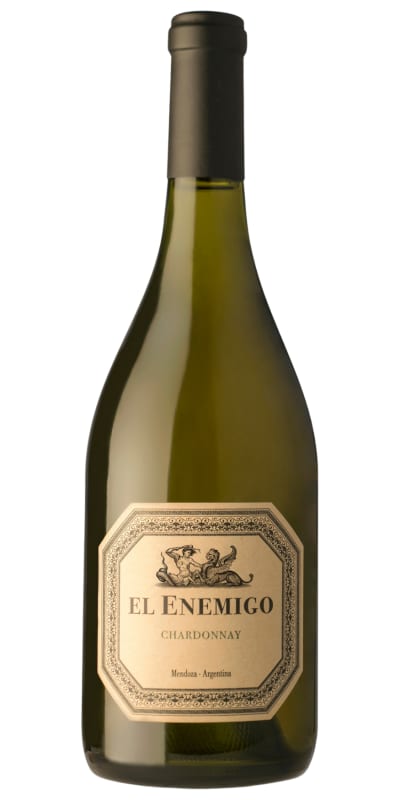


Winemaker Notes
Alejandro Vigil is a master of Chardonnay and a man who likes to push boundaries, which is why this impressive white was made with a little flor, just like a Fino Sherry. El Enemigo Chardonnay has bold oak, citrus, and lees aromas. The ripe lemon, apple, yeast, honey, and subtle oak flavors are complex and well-balanced. Toasty, spicy, briny, and refreshing with a full body, creamy texture, and long finish. Certified Sustainable by Bodegas de Argentina.
Pair El Enemigo Chardonnay with creamy cheeses like brie, summer crudité, fresh seafood, pesto chicken, or risotto.
Professional Ratings
-
James Suckling
This has aromas of ripe apricots, buttercream, baked apples and pastries. Medium-to full-bodied with a creamy, round and almost oily texture. Lovely balance of ripe fruit and toasted-pastry notes with bright acidity. Delicious finish. Fantastic value, as always. Drink now or hold.
-
Wine & Spirits
This wine showed its pedigree in our blind tasting, where its rich, layered orchard-fruit flavors were buttressed by well-integrated acidity. Pour a glass, put the rest into a decanter and enjoy the slow reveal of its white-mineral savor and golden wheat-field complexity. Winemaker Alejandro Virgil fermented the fruit—from Gualtallary and Tupungato—in 500-liter French oak barrels (35 percent new), allowing a partial veil of yeasts to form. With its elegant balance of complexity and power, this offers the satisfaction of a compelling white Burgundy on its own terms—a conversation starter and driver. Pretty stellar stuff.
-
Wine Spectator
Shows Viognier-like florals of gardenia and honeysuckle, with an elegant yet rich body of peach and pineapple. Reveals hints of thyme and mineral on the lengthy finish.


One of the most popular and versatile white wine grapes, Chardonnay offers a wide range of flavors and styles depending on where it is grown and how it is made. While it tends to flourish in most environments, Chardonnay from its Burgundian homeland produces some of the most remarkable and longest lived examples. California produces both oaky, buttery styles and leaner, European-inspired wines. Somm Secret—The Burgundian subregion of Chablis, while typically using older oak barrels, produces a bright style similar to the unoaked style. Anyone who doesn't like oaky Chardonnay would likely enjoy Chablis.

By far the largest and best-known winemaking province in Argentina, Mendoza is responsible for over 70% of the country’s enological output. Set in the eastern foothills of the Andes Mountains, the climate is dry and continental, presenting relatively few challenges for viticulturists during the growing season. Mendoza, divided into several distinctive sub-regions, including Luján de Cuyo and the Uco Valley, is the source of some of the country’s finest wines.
For many wine lovers, Mendoza is practically synonymous with Malbec. Originally a Bordelaise variety brought to Argentina by the French in the mid-1800s, here it found success and renown that it never knew in its homeland where a finicky climate gives mixed results. Cabernet Sauvignon, Syrah, Merlot and Pinot Noir are all widely planted here as well (and sometimes even blended with each other or Malbec). Mendoza's main white varieties include Chardonnay, Torrontés, Sauvignon Blanc and Sémillon.