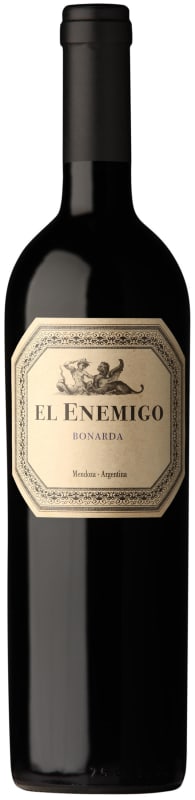


Winemaker Notes
The nose is rich and complex with intense ripe blackberries, raspberries and black cherries, laced with dark chocolate, liqueur and typical Cabernet Franc notes of fresh, aromatic herbs. On the palate, a sweet entry leads to a wine packed with ripe red and black fruit mingled with subtle liquorice and vanilla. Finishes long and lingering with fresh, crisp acidity and soft, velvety tannins.
Professional Ratings
-
James Suckling
A tight and focused Bonarda this year with a mineral and dark berry character. Some fresh lemongrass also. Medium body, light tannins and a precise and energetic finish.
-
Robert Parker's Wine Advocate
The earthy and herbal 2015 El Enemigo Bonarda contains some 15% Cabernet Franc from Barrancas. It's ripe and a little heady, balsamic and even minty. It fermented in two open-top 5,000 liter oak vats and concrete pools. It has the earthy rusticity of the variety, a juicy texture and some dusty tannins. Full of character and quite unique
-
Decanter
An easygoing and gratifying blend with red fruit aromas, followed by reverberating flavors of balsam, herbs and black fruit, sustained by a deft touch of well-managed oak.


Bonarda is a name given to a handful of distinct grape varieties, mainly growing in Italy and in Argentina. In Lombardy’s Oltrepò Pavese and Emilia Romagna’s Colli Piacentini zones, the grape called Bonarda is actually Croatina. In Novara, Bonarda Novarese, often blended with Spanna (Nebbiolo), is actually Uva Rara. DNA profiling shows that most of the Bonarda in Argentina is actually identical to California’s Charbono—and Charbono is actually the Douce Noire grape from Savoie. Somm Secret—Bonarda Piemontese, an aromatic variety, is the only true Bonarda. Before phylloxera, it covered 30% of Piedmontese vineyard acreage.

By far the largest and best-known winemaking province in Argentina, Mendoza is responsible for over 70% of the country’s enological output. Set in the eastern foothills of the Andes Mountains, the climate is dry and continental, presenting relatively few challenges for viticulturists during the growing season. Mendoza, divided into several distinctive sub-regions, including Luján de Cuyo and the Uco Valley, is the source of some of the country’s finest wines.
For many wine lovers, Mendoza is practically synonymous with Malbec. Originally a Bordelaise variety brought to Argentina by the French in the mid-1800s, here it found success and renown that it never knew in its homeland where a finicky climate gives mixed results. Cabernet Sauvignon, Syrah, Merlot and Pinot Noir are all widely planted here as well (and sometimes even blended with each other or Malbec). Mendoza's main white varieties include Chardonnay, Torrontés, Sauvignon Blanc and Sémillon.