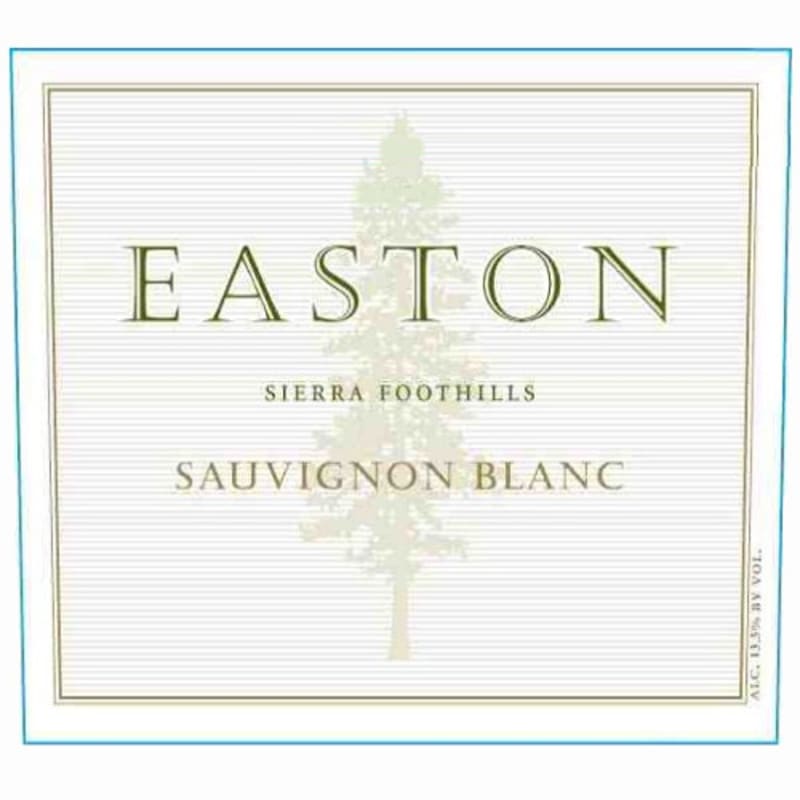

Winemaker Notes
Professional Ratings
-
Wine Enthusiast
Easton’s classic Sauvignon Blanc stands out year in and year out and this is no exception. Complex in texture and flavors of lime and tropical papaya, it’s marked by minerality and a pronounced crispness. It calls out to be served as an apéritif or to enjoy while cooking.


Capable of a vast array of styles, Sauvignon Blanc is a crisp, refreshing variety that equally reflects both terroir and varietal character. Though it can vary depending on where it is grown, a couple of commonalities always exist—namely, zesty acidity and intense aromatics. This variety is of French provenance. Somm Secret—Along with Cabernet Franc, Sauvignon Blanc is a proud parent of Cabernet Sauvignon. That green bell pepper aroma that all three varieties share is no coincidence—it comes from a high concentration of pyrazines (herbaceous aromatic compounds) inherent to each member of the family.

Originally a source of oenological sustenance for gold-seeking miners of the mid-1800s, the Sierra Foothills was the first region in California to produce wines from European grape varieties. Located between Sacramento and the Nevada border, this area’s immigrant settlers chose to forgo growing the then-ubiquitous Mission grape and instead brought with them superior vines from the Old World to plant alongside mining camps.
Zinfandel has been the most important variety of this region since its inception, taking on a spicy character with brambly fruit and firm structure. Amador and El Dorado counties, benefiting from the presence of volcanic and granite soils, are home to the best examples. Bold, robust Rhône Blends and Barbera are also important regional specialties.