

Winemaker Notes
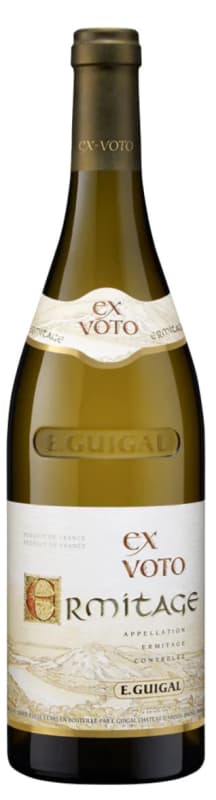
L’Ermitage Ex-Voto Blanc is produced only in exceptional vintages. It is remarkably aromatic and complex. The nose is bursting with acacia flowers, honey and toasted notes.
Professional Ratings
-
Jeb Dunnuck
The 2020 Ermitage Ex Voto Blanc brings another level of everything, and this is a quintessential, legendary Hermitage Blanc. Quince, ripe stone fruits, brioche, green almonds, and crushed stone notes all define the aromatics, and this beauty hits the palate with full-bodied richness, a deep, layered, multi-dimensional texture, incredible concentration, and a great, great finish. It's one of those powerful, opulent whites that stays flawlessly balanced and weightless. Give bottles 4-6 years and enjoy over the following two decades or more.
-
Decanter
This is looking very good, it's very oaky for sure, but there's good intensity and vibrancy. Long and with no excess alcohol, it's nicely balanced beneath the oak, but it will always be dominated by it. 80% lieu-dit Les Murets (20-year-old and 60-year-old vines), 20% L'Ermite.
-
Wine Spectator
This white pulls off the heavily oaked style well. A robe of toasty cedar and grilled hazelnut notes overlays a core of yellow apple, persimmon and melon. Salty and savory, with smoke and herb details filigreeing the creamy palate. Oolong tea, baking spices and butter fleck the powerful palate, while honeysuckle and wild mint hints bring lifted freshness at the end.
-
Robert Parker's Wine Advocate
Matured for 24 months exclusively in new barrels, the 2020 Ermitage Ex Voto Blanc is sourced from vines planted in the Les Murets and L’Ermite lieux-dits. It wafts from the glass with aromas of white flowers, almonds, ripe orchard fruits, quince and oak. Full-bodied, dense and concentrated, it offers a layered, seamless core of fruit and concludes with a long, saline finish.



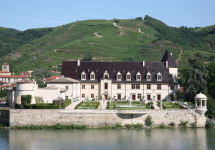
The Guigal domain was founded in 1946 by Etienne Guigal in the ancient village of Ampuis, home of the wines of the Côte-Rôtie. In these vineyards that are over 2400 years old, you can still see the small terraced walls characteristic of the Roman period. Etienne Guigal arrived in this region in 1923 at the age of 14. He made wine for over 67 vintages and, at the beginning of his career, participated in the development of the Vidal-Fleury establishment.
Despite his young age, Marcel Guigal took over from his father in 1961 when the latter was victim to a brutal illness rendering him blind. Marcel's hard work and perseverance enabled the Guigals to buy out Vidal-Fleury in 1984, although the establishment retains its own identity and commercial autonomy. In 2000, the Guigals purchased the Jean-Louis Grippat estate in Saint-Joseph and Hermitage, as well as the Domaine de Vallouit in Côte-Rôtie, Hermitage, Saint-Joseph and Crozes-Hermitage.
In the cellars of the Guigal estate in Ampuis, the northern appellations of the Rhône Valley are produced and aged. These are the appellations of Côte-Rôtie, Condrieu, Hermitage, Saint-Joseph and Crozes-Hermitage. The great appellations of the Southern Rhône, Chateauneuf-du-Pape, Gigondas, Tavel and Côtes-du-Rhône, are also aged in the Ampuis cellars.

Full-bodied and flavorful, white Rhône blends originate from France’s Rhône Valley. Today these blends are also becoming popular in other regions. Typically some combination of Grenache Blanc, Marsanne, Roussanne and Viognier form the basis of a white Rhône blend with varying degrees of flexibility depending on the exact appellation. Somm Secret—In the Northern Rhône, blends of Marsanne and Roussanne are common but the south retains more variety. Marsanne, Roussanne as well as Bourboulenc, Clairette, Picpoul and Ugni Blanc are typical.

One of the smallest and most important Syrah regions of northern Rhone, Hermitage is practically one single south-facing slope of crushed granite, thinly covered with varied, yet well-charted soil types. Many climats (well identified parcels) exist within Hermitage and while some smaller producers make single climat Syrahs, some larger ones blend to make one balanced expression of the appellation.
Though the AC regulations allow the addition of up to 15% white grapes to a red Hermitage, in practice it is usually made from Syrah alone. Winemaking is pretty traditional—or you might say historic—with hot fermentations and aging in older barrels of various sizes. The best wines, characterized by deep, dense and sexy flavors of black fruit, cocoa, licorice and tobacco, have massive textures and a solid 10-20 years aging potential.
The region of Hermitage is totally enclosed; the only place it could go really is to literally fall down its own hill into the city of Tain or the Rhone River. Soil erosion is a problem and terraces exist alongside the hill in order to keep the earth in place. Crozes-Hermitage encloses the region entirely to its north and south.
While Hermitage seems synonymous with some of the best Syrah on the planet, actually about one third of the wine produced here comes from white grapes. The full, lush and robust Marsanne or the less common, but almost more charming, Roussanne create wonderful whites in which the best have great potential for aging, like the reds.