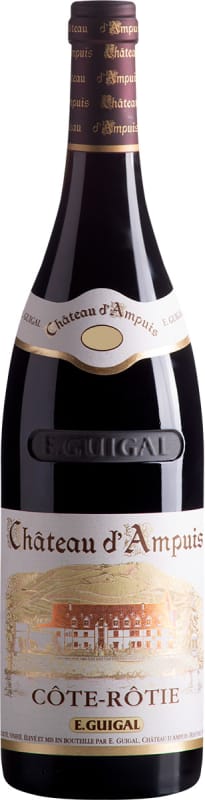


Winemaker Notes
Blend: 93% Syrah, 7% Viognier
Professional Ratings
-
Decanter
Scheduled to be bottled just after this visit, the 2015 Côte Rôtie Château D'Ampuis reveals a deep ruby/purple color as well as an extraordinary bouquet of smoked black fruits, caramelized blackcurrants, leady herbs, ground pepper, and earth. It's deep, rich, massively concentrated, and a powerhouse of a wine that’s going to need bottle age, but wow, what a wine! Range: 96-98
-
Jeb Dunnuck
I loved the 2015 Côte Rôtie Château D'Ampuis from barrel, and this beauty does not disappoint from bottle. Coming from a handful of top sites, it’s made in the same fashion as the top La Las, seeing four years in new barrels. Deep purple-hued with a classic bouquet of black raspberries, jammy blackberries, acacia flowers, vanilla bean, and spice, it hits the palate with full-bodied richness, a rounded, expansive mid-palate, sweet tannins, and a great, great finish. Savvy readers will stock up on this beauty. Give it 3-5 years and enjoy over the following two decades or more.
-
Wine Spectator
A gorgeous core of steeped raspberry, boysenberry and fig fruit gives this a showy side. A lush structure flows underneath, while long echoes of warm ganache, black tea and espresso linger. The fruit keeps this in the suave and alluring camp overall, though there's plenty of grip for cellaring. Best from 2022 through 2042.
-
James Suckling
Impressively deep aromas of graphite, tar, dark plums, blackberries, chocolate, pepper and all manner of baking spices. The palate has a super rich and attractive feel with smooth tannins, saturated in blackberry and chocolate flavors. This has such dramatic depth and youthful power still. Try from 2023.
-
Robert Parker's Wine Advocate
The 2015 Cote Rotie Chateau d'Ampuis is remarkably dense and concentrated, packed with dark fruit and rich tannins. It's full-bodied and supple on the mid-palate, adding hints of vanilla, espresso and dried spices on the long, velvety finish. Give it another 3-4 years in the cellar, then drink it over the next two decades. Rating: 95+
-
Wine & Spirits
This is a blend of fruit from seven of Guigal’s old-vine parcels in Côte-Rôtie, fermented in stainless-steel tanks for four weeks, then aged in new oak barrels for 38 months. The wood influence is strident right now, in both spicy, smoky scents as well as in grippy, dry tannins. But the fruit is ripe and rich enough to push against those wood tannins, promising to overtake them in time.


Marked by an unmistakable deep purple hue and savory aromatics, Syrah makes an intense, powerful and often age-worthy red. Native to the Northern Rhône, Syrah achieves its maximum potential in the steep village of Hermitage and plays an important component in the Red Rhône Blends of the south, adding color and structure to Grenache and Mourvèdre. Syrah is the most widely planted grape of Australia and is important in California and Washington. Sommelier Secret—Such a synergy these three create together, the Grenache, Syrah, Mourvedre trio often takes on the shorthand term, “GSM.”

The cultivation of vines here began with Greek settlers who arrived in 600 BC. Its proximity to Vienne was important then and also when that city became a Roman settlement but its situation, far from the negociants of Tain, led to its decline in more modern history. However the 1990s brought with it a revival fueled by one producer, Marcel Guigal, who believed in the zone’s potential. He, along with the critic, Robert Parker, are said to be responsible for the zone’s later 20th century renaissance.
Where the Rhone River turns, there is a build up of schist rock and a remarkable angle that produces slopes to maximize the rays of the sun. Cote Rotie remains one of the steepest in viticultural France. Its varied slopes have two designations. Some are dedicated as Côte Blonde and others as Côte Brune. Syrahs coming from Côte Blonde are lighter, more floral, and ready for earlier consumption—they can also include up to 20% of the highly scented Viognier. Those from Côte Brune are more sturdy, age-worthy and are typically nearly 100% Syrah. Either way, a Cote Rotie is going to have a particularly haunting and savory perfume, expressing a more feminine side of the northern Rhone.