


Winemaker Notes
Merlot and Cabernet Franc in equal parts, from low crop yield and strong character. The fruitful Merlot intersects the balsamic notes of Cabernet Franc, connecting spicy and mint accents with cherries, blueberry and currant.
Professional Ratings
-
Robert Parker's Wine Advocate
This wine shows an impeccably precise and detailed bouquet. The 2014 Merlot Cabernet Franc Altrovino represents the two grapes in equal parts. Starting with the 2015 vintage, this wine will be partially aged (15%) in large Tuscan clay amphora. This vintage, however, is refined in traditional cement vats and 3,000-liter oak casks. The results are beautiful and polished with bright aromas of wild berry, sour cherry, prune, spice and leather. I was very attracted to that subtle touch of fine mineral or talc powder that adds an even greater sense of finesse and elegance on the close.
Rating: 92+ -
James Suckling
This blend of merlot and cabernet franc is fascinating and so enticing with such intense aromatics and beauty. Medium body, firm and silky tannins and a tight palate. A little austere. But I like the tightness. Aged about a year on old casks. Drink it.
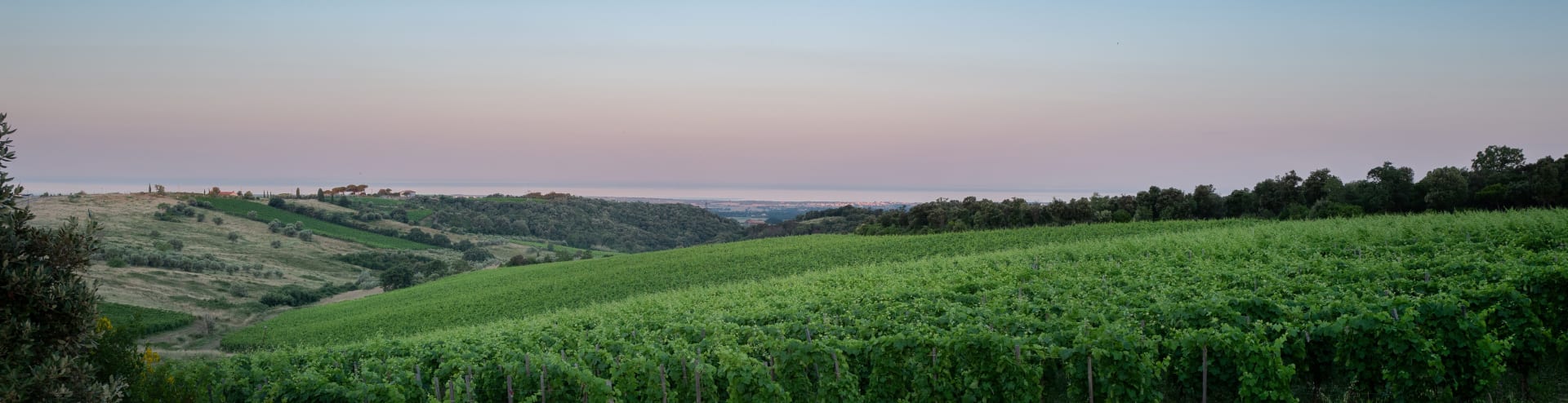


In 2000 Elena Celli and Luca D'Attoma found in Riparbella the land where they gave life to their project: an extreme and severe place, mainly clayish and with many stones, uncultivated for many years and surrounded by Mediterranean shrubs. This is a hill that smells of the sea and forest. It faces the coast at an altitude of 250-300 meters (approx. 820-980 feet). There is sun, light and a continuous breeze that guarantees temperature range, fundamental for bouquet and slow maturation, the promise of perfect balance. The idea behind establishing their winery on the Coast of Tuscany was to produce wines from their favorite grapes: Cabernet Franc, Syrah and Merlot and here, both climate and soil, are ideal for these grape varieties. They decided from the beginning to cultivate the land following Biodynamic Agriculture, in order to respect and preserve this immaculate environment and maintain a pure and lively soil. In this way, they have grapes that are rich in aromas, flavors and originality to produce good, clean, direct and tasty wines, each with its own unique and recognizable character.

Legendary in Italy for its Renaissance art and striking landscape, Tuscany is also home to many of the country’s best red wines. Sangiovese reigns supreme here, as either the single varietal, or a dominant player, in almost all of Tuscany’s best.
A remarkable Chianti, named for its region of origin, will have a bright acidity, supple tannins and plenty of cherry fruit character. From the hills and valleys surrounding the medieval village of Montalcino, come the distinguished and age-worthy wines based on Brunello (Sangiovese). Earning global acclaim since the 1970s, the Tuscan Blends are composed solely of international grape varieties or a mix of international and Sangiovese. The wine called Vine Nobile di Montepulciano, composed of Prognolo Gentile (Sangiovese) and is recognized both for finesse and power.