
Winemaker Notes
Professional Ratings
-
Wilfred Wong of Wine.com
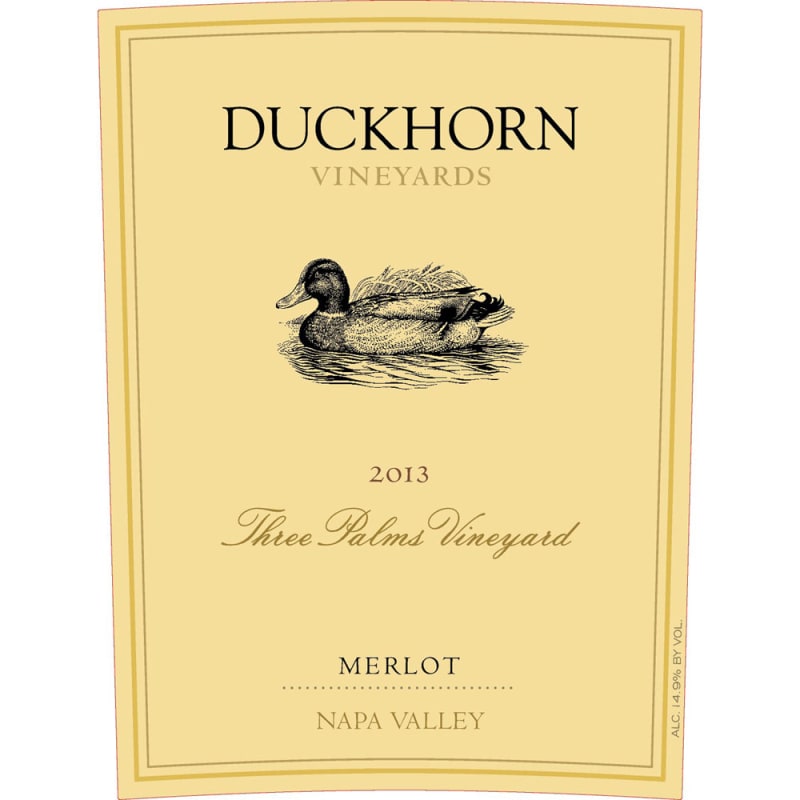
One of the greatest wines produced by this iconic winery, the 2013 Duckhorn Vineyards Three Palms Merlot shows power and class that is unsurpassed—explodes with red, blue and black fruits, sweet and savory earth, and tempered with the perfect touch of sweet oak. This wine is a major success in the evolution of Merlot. Tastes pretty good now and will improve significantly over time. (Tasted: September 13, 2016, San Francisco, CA)
-
Connoisseurs' Guide
This very deep and involving wine is definitively Merlot in its unwavering focus on concentrated black cherries, yet it is far more than simply fruity and reveals lovely, sweet oak support with gentle notes of fresh loam. It has plenty of weight but is carefully constructed and matches richness with considerable refinement, and, if it progressively firms and tightens a touch as it crosses the palate, it exhibits remarkable stamina and fruity strength. It serves to remind that top-flight Merlot deserves a special place in the cellar, and it takes its accustomed position among those at the head of the varietal class.
-
Wine Enthusiast
An integrated, powerful wine from a famous northern Napa Valley site, this wine offers notes of baked plum and cherry wrap around the structured, spicy oak. Lingering accents of a pepper, clove and graphite grace the finish.
-
Wine Spectator
Combines good structure with a supple texture, showing aromas of red currant and dark chocolate and flavors of cherry, spice and licorice.


With generous fruit and supple tannins, Merlot is made in a range of styles from everyday-drinking to world-renowned and age-worthy. Merlot is the dominant variety in the wines from Bordeaux’s Right Bank regions of St. Emilion and Pomerol, where it is often blended with Cabernet Franc to spectacular result. Merlot also frequently shines on its own, particularly in California’s Napa Valley. Somm Secret—As much as Miles derided the variety in the 2004 film, Sideways, his prized 1961 Château Cheval Blanc is actually a blend of Merlot and Cabernet Franc.

One of Napa Valley’s oldest wine growing subregions but last to gain appellation status, Calistoga occupies the northernmost section of the valley. Beginning at the foot of Mount St. Helena, its vineyards stretch over steep canyons and roll out onto the valley floor. The soils in Calistoga are volcanic, which means they are heavy in minerals, low in organic matter and allow good drainage for vine roots, creating less green growth and more concentration of flavor within the grape berries.
Summer days are very hot but most nights cool down with moist ocean breezes sneaking in over the Mayacamas Mountains or from Knights Valley to its northwest.
Cabernet Sauvignon is the area’s star variety with Zinfandel coming in a strong second, though the latter commands far less price per tonnage so continues to be outshined by Cabernet in vineyard acreage, save for some important exceptions.