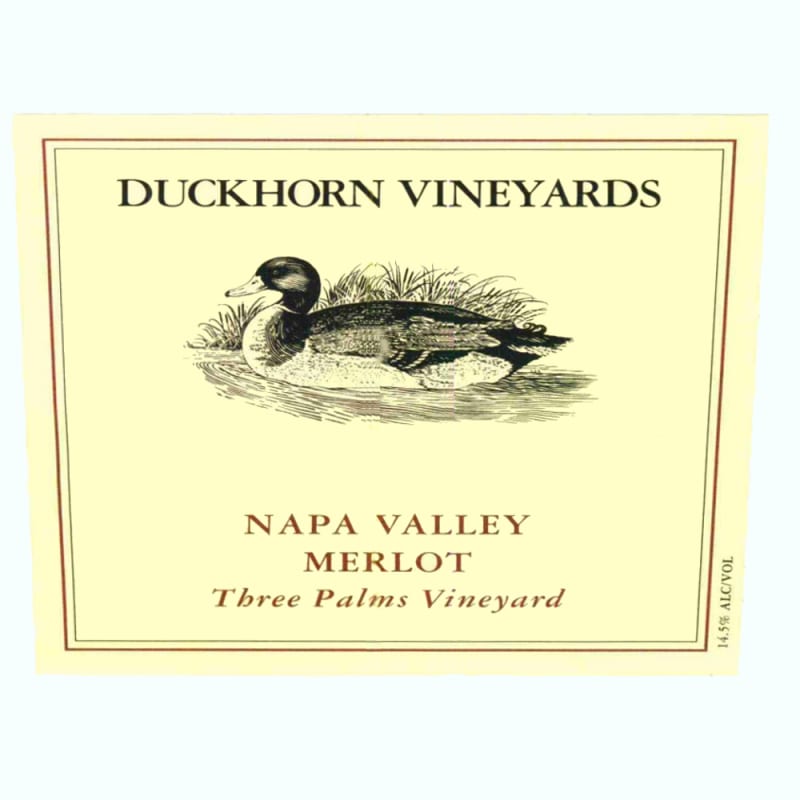

Winemaker Notes
The 2006 growing season was marked by a very mild summer with a mid-July heat spike that accelerated ripening. Mild temperatures continued throughout the fall allowing for a moderately paced harvest. The long growing season brought complex and intense flavor and aroma development.
75% Merlot, 13% Cabernet Sauvignon, 7% Cabernet Franc, 5% Petit Verdot
Professional Ratings
-
Connoisseurs' Guide
A long-time winner when it comes to Merlot, Duckhorn still ranks among the best. Rich, ripe and juicy with plenty of vanillin oak sweetening its way, this well-extracted offering shows off the varietal's supple side and yet sports a fairly firm underpinning of grippy young tannins. While it has just enough frontal richness to allow early drinking with heartier cuts of beef, this wine will show far better if given a chance to develop, and it should be left alone for four or five years.
-
Wine Enthusiast
An extraordinarily rich, tannic and dry wine, which despite its big structure is relieved by potent flavors of cherries, blackberries, plum and cedar. It's a complex, well-crafted wine that should develop in the bottle at least through 2014.
-
Wine & Spirits
Merlot thrives in the rocky soils of this famed vineyard in southern Calistoga; Duckhorn purchases this fruit from a block that was replanted in 1993 and '94. This 2006 is a sleek, juicy merlot with red fruit flavors of cranberries and cherry wrapped in a plush blanket of new oak. The fruit is tart, with edges of mint, the oak as sweet as caramel, but rather than falling to either extreme, the wine strikes a smooth, clean balance, ready for roast duck.


As Napa Valley’s third most planted grape, Napa Valley Merlot shows time and time again its potential to produce exceptional results. Napa’s vaunted combination of climate, soil and the human factor of winemaking expertise lead to big, ripe, cellar-worthy and world-class versions.
Whether made by itself in single varietal bottlings or as an important role in Bordeaux Blends, Merlot continues a prominent role in this famous region. While Cabernet typically takes the lead role, Merlot’s contribution—even at 10% to 20% or so—is significant indeed. Often described as “the flesh on Cabernet’s bones,” Merlot lends a soft, round and plush character that beautifully complements Cabernet’s linear, full-throttle structure. Its flavors of plums plus subtle herbs and mint also dovetail nicely with Cabernet’s blackberry and cassis.