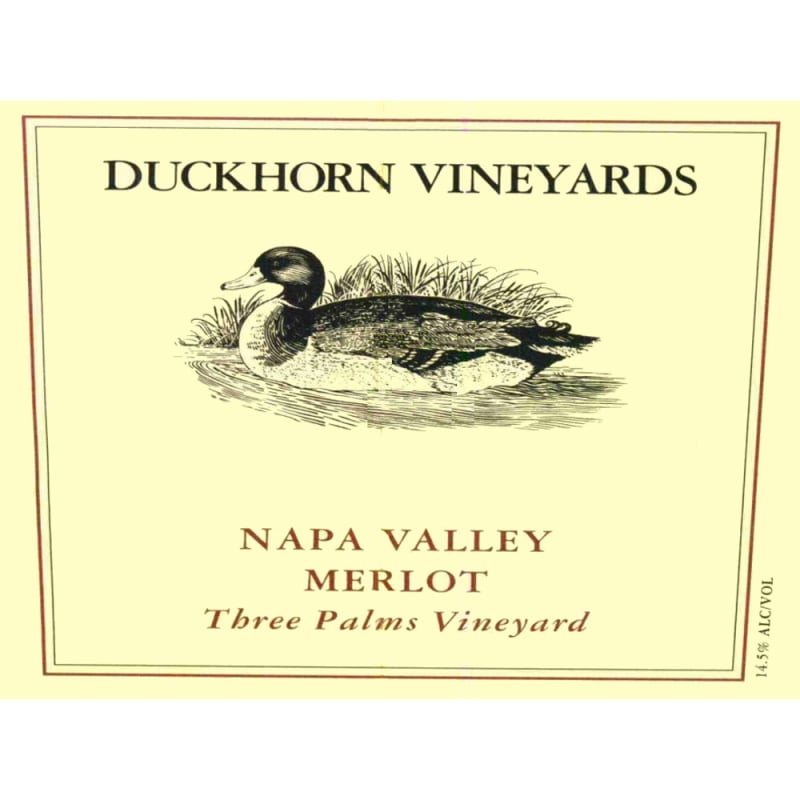

Winemaker Notes
In the late 1800s, the land that is now home to the Three Palms Vineyard was a residence for famed San Francisco socialite Lillie Hitchcock Coit. She left her mark on San Francisco in the form of Coit Tower. She left her mark on the Napa Valley in the form of three lone palm trees, which were all that remained from her estate after the house fell into disuse and ruin. The 83-acre vineyard is located on the northeast side of the Napa Valley in an alluvial fan created by the outwash of Selby Creek where it spills out of Dutch Henry Canyon. The site is covered with volcanic stones washed down over the centuries from the canyon. The soil is rocky and well drained, causing the vines to send their roots far, wide, and deep to find the necessary nutrients and water. The stones aid the vineyard, absorbing the sun's heat during the day and radiating the heat during the night to protect the vines during frost season and help ripen the fruit. Except for a few vintages, we have produced a Three Palms Merlot since the inaugural 1978 vintage.
"Black-garnet hue with a fuchsia rim. Forward aromas of plum, cherry compote and warm caramel. Classic Three Palms fruit with a combination of power and finesse emitting layers of black cherry, plum, sweet oak and cedar accents. Youthful tannins do surface in the finish giving apt support to the lingering sweetness."
-Wine News
Professional Ratings
-
Wine Enthusiast
Duckhorn's Three Palms bottling is one of the oldest and most consistent Merlot vineyard designations in California and this is a classic example. The wine always is very tannic. But the '05 is dry and rich and complex in mineral-laden cherries and currants, with just the right application of new oak. You can decant it now for several hours and enjoy with a dramatically charred streak, but it will develop beautifully through 2011, at least.


As Napa Valley’s third most planted grape, Napa Valley Merlot shows time and time again its potential to produce exceptional results. Napa’s vaunted combination of climate, soil and the human factor of winemaking expertise lead to big, ripe, cellar-worthy and world-class versions.
Whether made by itself in single varietal bottlings or as an important role in Bordeaux Blends, Merlot continues a prominent role in this famous region. While Cabernet typically takes the lead role, Merlot’s contribution—even at 10% to 20% or so—is significant indeed. Often described as “the flesh on Cabernet’s bones,” Merlot lends a soft, round and plush character that beautifully complements Cabernet’s linear, full-throttle structure. Its flavors of plums plus subtle herbs and mint also dovetail nicely with Cabernet’s blackberry and cassis.