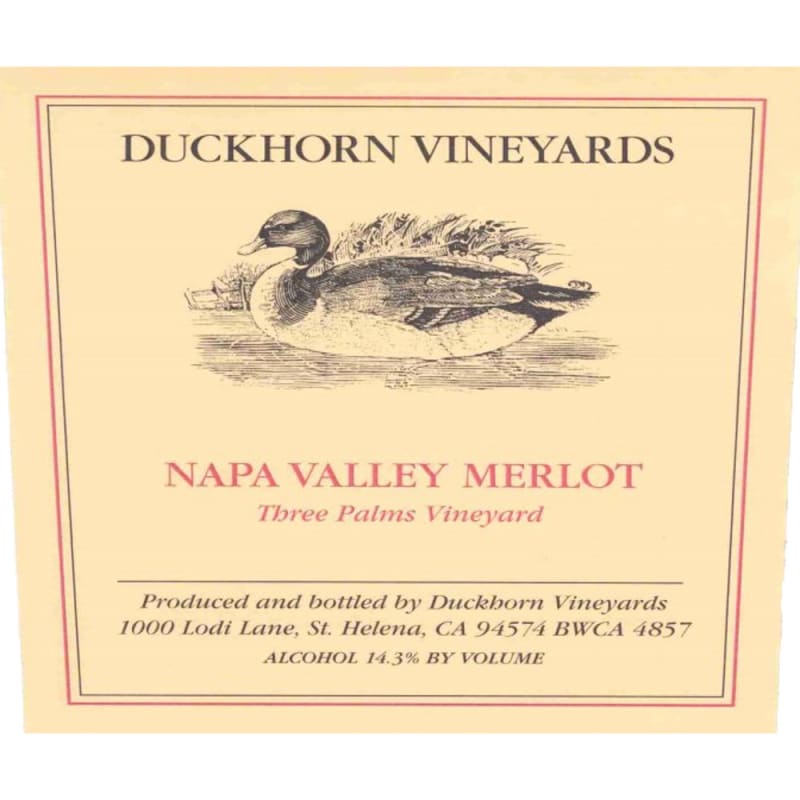

Winemaker Notes
Professional Ratings
-
Wine Enthusiast
Tannic as usual from this single vineyard near Calistoga, but with a great heart of cherry and blackberry fruit and wonderful suggestions of herbs and nettles. Bone dry, but ripe in sweet fruit, the quintessence of cherry. An obvious cellar candidate that will hold through the decade.
-
Robert Parker's Wine Advocate
The full-bodied 2001 Merlot Three Palms Vineyard’s opaque ruby/purple hue is followed by a stunning bouquet of sweet kirsch, plum liqueur, blueberries, spring flowers and roasted coffee. Revealing superb richness, impressive purity and a multidimensional mouthfeel, this stunning Merlot can be enjoyed over the next 10-15+ years.


With generous fruit and supple tannins, Merlot is made in a range of styles from everyday-drinking to world-renowned and age-worthy. Merlot is the dominant variety in the wines from Bordeaux’s Right Bank regions of St. Emilion and Pomerol, where it is often blended with Cabernet Franc to spectacular result. Merlot also frequently shines on its own, particularly in California’s Napa Valley. Somm Secret—As much as Miles derided the variety in the 2004 film, Sideways, his prized 1961 Château Cheval Blanc is actually a blend of Merlot and Cabernet Franc.

One of Napa Valley’s oldest wine growing subregions but last to gain appellation status, Calistoga occupies the northernmost section of the valley. Beginning at the foot of Mount St. Helena, its vineyards stretch over steep canyons and roll out onto the valley floor. The soils in Calistoga are volcanic, which means they are heavy in minerals, low in organic matter and allow good drainage for vine roots, creating less green growth and more concentration of flavor within the grape berries.
Summer days are very hot but most nights cool down with moist ocean breezes sneaking in over the Mayacamas Mountains or from Knights Valley to its northwest.
Cabernet Sauvignon is the area’s star variety with Zinfandel coming in a strong second, though the latter commands far less price per tonnage so continues to be outshined by Cabernet in vineyard acreage, save for some important exceptions.