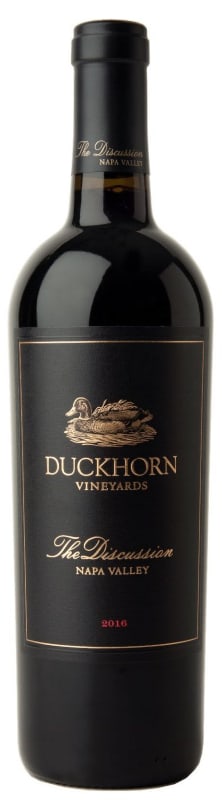


Winemaker Notes
Blend: 55% Cabernet Sauvignon, 43% Merlot, 1% Cabernet Franc, 1% Petit Verdot
Professional Ratings
-
Wine & Spirits
Breaking from Duckhorn’s focus on varietally labeled wines, Renee Ary blends The Discussion based on favored estate parcels. In 2016, it’s 55 percent cabernet sauvignon, 43 percent merlot and one percent each of franc and petit verdot. Given enough time to evolve past the almost peachy ripeness of its fruit and the significant presence of oak (it spends 18 months in new French oak barrels, then another six months in neutral barrels), the wine feels complete and completely rich. It has none of the stodginess common to cabernet, instead presenting a powerful structure, intense and gracious in its bitter-chocolate tannins. All the elements point in an upward trajectory, a path they should follow with extended bottle age.
-
Wilfred Wong of Wine.com
COMMENTARY: The Discussion 2016 by Duckhorn Vineyards exemplifies an excellent synergy of Bordeaux grape varieties. TASTING NOTES: This wine comes right at you with aromas and flavors of black fruits, anise, and blackberries. Pair it with a juicy, grilled, well-marbled ribeye topped with finely minced shallots. (Tasted: July 19, 2020, San Francisco, CA)


Undoubtedly proving its merit over and over, Napa Valley is a now a leading force in the world of prestigious red wine regions. Though Cabernet Sauvignon dominates Napa Valley, other red varieties certainly thrive here. Important but often overlooked include Merlot and other Bordeaux varieties well-regarded on their own as well as for their blending capacities. Very old vine Zinfandel represents an important historical stronghold for the region and Pinot noir is produced in the cooler southern parts, close to the San Pablo Bay.
Perfectly situated running north to south, the valley acts as a corridor, pulling cool, moist air up from the San Pablo Bay in the evenings during the hot days of the growing season, which leads to even and slow grape ripening. Furthermore the valley claims over 100 soil variations including layers of volcanic, gravel, sand and silt—a combination excellent for world-class red wine production.