

Winemaker Notes
Professional Ratings
-
Robert Parker's Wine Advocate
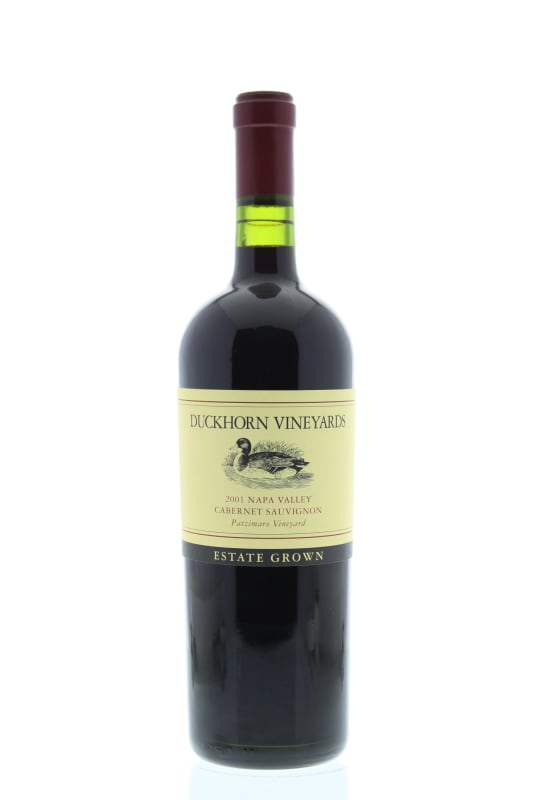
The 2001 Cabernet Sauvignon Patzimaro Vineyard is the most evolved and drinkable of these single vineyard offerings. Its dense purple color is accompanied by a stunning perfume of sweet licorice intermixed with black currants, chocolate, cedar and spice box. With sweet tannins, a broad, savory, multidimensional mouthfeel, abundant fruit and an impressive finish, it will provide plenty of pleasure over the next 20 years.
-
Wine Enthusiast
Similar to the Stout bottling, a rather dry, tannic wine, filled with dark stone fruit flavors. Grips the palate with dusty astringency now, but aging should soften and release the underlying sweetness and fruit. Nice overall balance and concentration.
-
Wine Spectator
Floral, grapey scents are firm and tight on the palate, giving it excellent structure, and it unfolds gracefully, leading to subtle flavor nuances and hints of blueberry and spice, finishing with a firm yet ripe core of tannins.


A noble variety bestowed with both power and concentration, Cabernet Sauvignon enjoys success all over the globe, its best examples showing potential to age beautifully for decades. Cabernet Sauvignon flourishes in Bordeaux's Medoc where it is often blended with Merlot and smaller amounts of some combination of Cabernet Franc, Malbecand Petit Verdot. In the Napa Valley, ‘Cab’ is responsible for some of the world’s most prestigious, age-worthy and sought-after “cult” wines. Somm Secret—DNA profiling in 1997 revealed that Cabernet Sauvignon was born from a spontaneous crossing of Cabernet Franc and Sauvignon Blanc in 17th century southwest France.

St. Helena is in the heart of the Napa Valley, nestled between Calistoga to the north and Rutherford on its southern border. On its western side, the Mayacamas Mountains guard it from the cooling effects of the Pacific Ocean; to its east stand the Vaca Mountains. In conjunction, these mountain ranges serve to lock in summer daytime heat. But in the evening, cool air from the San Pablo Bay funnels up through the valley, creating very chilly nights. It isn’t uncommon for temperatures to drop 50 degrees, a shift that promotes a balance of sugar ripeness and acidity in wine grapes.
St. Helena contains a plethora of different soil types in a small area, which have been enhanced over centuries by rain runoff from both mountain ranges. Its vineyards cover a variety of terrain, spreading across the bucolic valley floor and its benchlands.
These ideal topographic and climatic growing conditions easily caught the attention of early winemaking pioneers. In fact, St. Helena is the birthplace of Napa Valley’s commercial wine industry. Dr. Crane founded his cellar in 1859, David Fulton in 1860 and Charles Krug in 1861.
Today there are no less than 400 separate vineyards planted within the 12,000 acres that make up the St. Helena appellation.
Revered most for its red wines based on Bordeaux varieties, namely Cabernet Sauvignon, the St. Helena appellation is also a source of superior Syrah, Zinfandel and Sauvignon blanc.