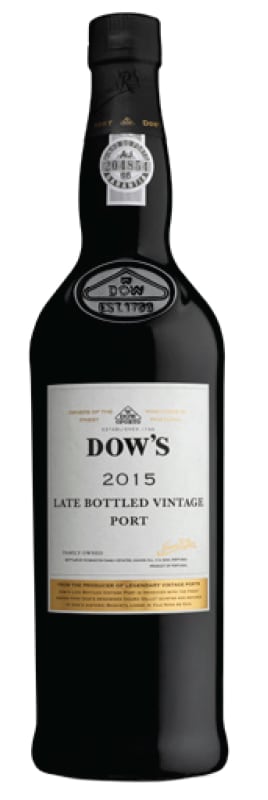


Winemaker Notes
Deep purple with an opaque centre. Exuberant aromas of blackberry and liquorice are complemented by subtle notes of cocoa and mint. There is also a floral element (roses), which reflects the significant Touriga Franca component of the blend. On the palate, the wine is full and broad with remarkable concentration and intensity, held together by a fine structure, which is underpinned by fine, peppery tannins. The wine has a long, spicy finish with Dow’s trademark drier edge.
This 2015 Late Bottled Vintage (LBV) shares the same provenance with Dow’s legendary Vintage Ports, namely the Quinta do Bomfim and Quinta da Senhora da Ribeira vineyards, which have been owned by Dow’s since the late 19th century. Five generations of Symington family winemakers have tended these vineyards, deriving from them Dow’s distinctive wine profile, characterised by intense, structured wines with fresh black fruit flavors, peppery tannins and a hallmark drier style. The grapes from both properties were trodden in the on-site modern lagares, which equip the Quinta do Bomfim and Quinta da Senhora da Ribeira wineries.
Professional Ratings
-
Wine Enthusiast
With the dryness typical of this producer, this is a densely textured Port that will certainly age well. It has great structure as well as dark fruits that have blackberry jelly flavors. This LBV can be drunk now, but it will surely benefit from the few more months until 2022.


Port is a sweet, fortified wine with numerous styles: Ruby, Tawny, Vintage, Late Bottled Vintage (LBV), White, Colheita, and a few unusual others. It is blended from from the most important red grapes of the Douro Valley, based primarily on Touriga Nacional with over 80 other varieties approved for use. Most Ports are best served slightly chilled at around 55-65°F. To learn more, see our full Port Wine Guide

The home of Port—perhaps the most internationally acclaimed beverage—the Douro region of Portugal is one of the world’s oldest delimited wine regions, established in 1756. The vineyards of the Douro, set on the slopes surrounding the Douro River (known as the Duero in Spain), are incredibly steep, necessitating the use of terracing and thus, manual vineyard management as well as harvesting. The Douro's best sites, rare outcroppings of Cambrian schist, are reserved for vineyards that yield high quality Port.
While more than 100 indigenous varieties are approved for wine production in the Douro, there are five primary grapes that make up most Port and the region's excellent, though less known, red table wines. Touriga Nacional is the finest of these, prized for its deep color, tannins and floral aromatics. Tinta Roriz (Spain's Tempranillo) adds bright acidity and red fruit flavors. Touriga Franca shows great persistence of fruit and Tinta Barroca helps round out the blend with its supple texture. Tinta Cão, a fine but low-yielding variety, is now rarely planted but still highly valued for its ability to produce excellent, complex wines.
White wines, generally crisp, mineral-driven blends of Arinto, Viosinho, Gouveio, Malvasia Fina and an assortment of other rare but local varieties, are produced in small quantities but worth noting.
With hot summers and cool, wet winters, the Duoro has a maritime climate.