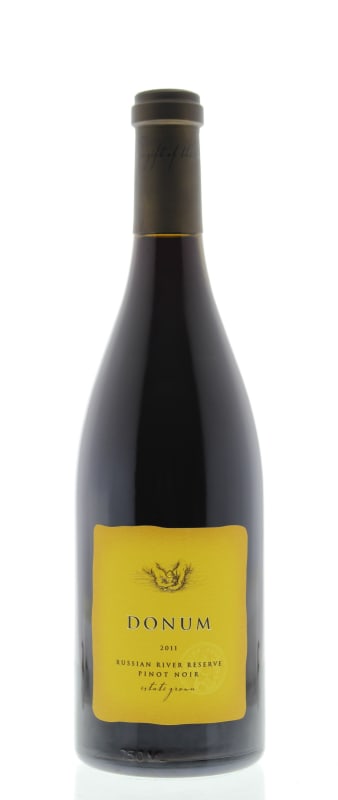


Winemaker Notes
Professional Ratings
-
Connoisseurs' Guide
The Russian River Reserve heads up these latest releases from one of California's top Pinot Noir producers, and, given the vintage challenges, this is a superb group indeed. Here, volume, depth and richness are all combined with clearly stated red cherry fruit with a hint of berryish sweetness carried brilliantly by the solid, slightly open, supple and lively mouthfeel. Its flavors hold on and on at the end, and if one can spot a bit of late-arriving heat, it will be ameliorated in service with rich foods like duck breasts in a savory wine sauce or a juicy rib roast.
-
Robert Parker's Wine Advocate
The 2011 Pinot Noir Reserve boasts the most saturated dark plum/ruby color of these Pinots, along with copious aromas of forest floor, red and black currants and earth. This well-endowed, rich, medium to full-bodied Pinot offers terrific purity, abundant texture and richness, a broad, Cote de Nuits-like, savory, floral and foresty character, and an exceptionally long finish. Enjoy this profound Russian River Pinot over the next 7-10 years.
-
Wine Spectator
A rich, full-blown expression of ripe dark berry flavors, with raspberry, boysenberry, black licorice and subtle floral and spice notes. The texture is both supple and firm, leading to a lingering finish. Drink now through 2023. 343 cases made.


While the Russian River Valley is a large appellation with multiple climate zones and soil types, it is best known for cool-climate varieties, with Pinot Noir as the most celebrated. The grapes benefit from a reliable late afternoon flow of Pacific Ocean fog through the Petaluma Gap and along the Russian River Valley that ensures slow and steady ripening and the preservation of grape acidity. Today many of California’s most highly regarded Pinot Noir vineyards are in the Russian River Valley, along with its sub-appellation, Green Valley.
Historically Russian River Valley Pinot Noirs had bright red fruit and delicate earthy, mineral notes. But changes in viticultural and winemaking practices have led to stylistic changes in some of the region’s wines. Adjustments to canopy management, among other techniques, have resulted in riper fruit and bolder wines as well. These show flavors of black cherry, blackberry, cola, spice and darker, loamy earth tones, accenting traditional Pinot Noir notes of strawberry, raspberry and light cherry.