

Winemaker Notes
The 2009 vintage is vibrant and complex, filled with notes of plum, black cherry and earthy tobacco. Pure and precise on the palate, aromas of chocolate and lightly toasted almond complement firm tannins throughout the long finish.
Blend: 87% Cabernet Sauvignon, 5% Cabernet Franc, 8% Petit Verdot
Professional Ratings
-
Robert Parker's Wine Advocate
The 2009 Napanook, which Moueix claims to be one of his favorite wines of the last decade, is among the finest they have made. A blend of 87% Cabernet Sauvignon and the rest Petit Verdot and Cabernet Franc, it exhibits a dark plum/purple color along with a big, sweet bouquet of licorice, incense, roasted herbs, loamy soil, kirsch, black currants and underbrush. Medium to full-bodied with silky tannins and a round, opulent mouthfeel, this beauty can be drunk now and over the next 12-15 years.
-
Wine Enthusiast
Elegantly smooth in the mouth, like silk and velvet - this has rich, forward blackberry, black currant and oak flavors. It feels dramatic and complex, a white-tablecloth Cabernet for pairing with fine meats and cheese.



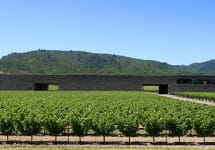
In the late 1960s, while attending the University of California at Davis, Christian Moueix fell in love with the Napa Valley and its wines. Son of Jean-Pierre Moueix, the famed wine merchant and producer from Libourne, France, Moueix returned home in 1970 to manage the family vineyards, including Chateaux Petrus, La Fleur-Petrus, Trotanoy in Pomerol and Magdelaine in Saint Emilion.
His love of Napa Valley lingered and in 1981, he discovered the historic Napanook vineyard, a 124-acre site west of Yountville that had been the source of fruit for some of the finest Napa Valley wines of the 1940s and 1950s. In 1982, Moueix entered into a partnership to develop the vineyard and, in 1995, became its sole owner. He chose the name 'Dominus' or 'Lord of the Estate' in Latin to underscore his longstanding commitment to stewardship of the land.

One of the world’s most classic and popular styles of red wine, Bordeaux-inspired blends have spread from their homeland in France to nearly every corner of the New World. Typically based on either Cabernet Sauvignon or Merlot and supported by Cabernet Franc, Malbec and Petit Verdot, the best of these are densely hued, fragrant, full of fruit and boast a structure that begs for cellar time. Somm Secret—Blends from Bordeaux are generally earthier compared to those from the New World, which tend to be fruit-dominant.

One of Napa Valley's most historic sub-appellations, Yountville spreads through some of the valley's ideal cooler sites and enjoys success with a handful of different and significant grape varieties.
Syrah competes strongly with Cabernet Sauvignon here for optimal vineyard real estate followed by Pinot noir, Pinot blanc and Sauvignon blanc.
This sub-AVA of Napa Valley is rich in the history that makes Napa Valley what it is today, and not just for red wines. Moët & Chandon entered the California winemaking business via Yountville in 1973 with the establishment Domaine Chandon. Their goal has always been to produce top quality méthode champenoise sparkling wines.
Christian Moueix, originally responsible for managing Chateau Petrus and La Fleur-Petrus in Pomerol, arrived in Yountville in the early 1980s. He formed a partnership with Rohin Lail and Marcia Smith, inheritors of Napanook vineyard from their father John Daniel of Inglenook in Rutherford. In 1995 Moueix became sole owner of Napanook and chose the name Dominus, which today produces some of Napa’s highest scoring, age-worthy Bordeaux Blends.