

Winemaker Notes
Professional Ratings
-
Robert Parker's Wine Advocate
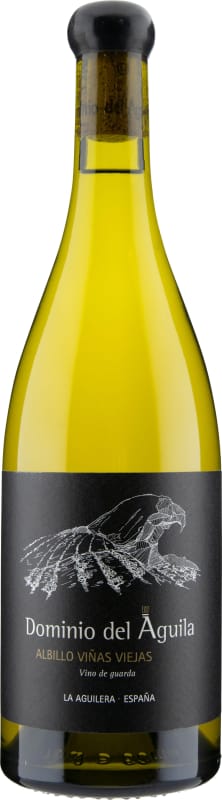
The white 2017 Albillo Viñas Viejas comes from the toughest harvest in recent years, a growing season marked by severe frosts followed by a warm summer and an early harvest. Despite everything, the wine is only 13% alcohol and has a pH of 3.14, meaning there's a lot of freshness here despite being harvested after some of the earlier reds. The grapes come from organically farmed vines at an average of 880 meters in altitude in the village of La Aguilera, where the soils are rich in red clay, limestone and sand. This is the Albillo Mayor from Ribera del Duero, unrelated to the other Albillo (Real, Criollo...) from vines that are over 100 years old, some ungrafted. The clusters were foot trodden, and the juice put in oak casks to ferment slowly with indigenous yeasts and without stirring the lees or anything, using minimum doses of sulfur. The wine matured in oak barrels for 35 months before it was hand bottled without being filtered or fined. This has a very Burgundian profile—it's aromatic, expressive, open, smoky, spicy and flinty. But this overdelivers for the adverse conditions of the harvest; it has very good balance and is tasty, intense and chalky, not quite reaching the electricity of the 2016, but it has its character. This is approachable now, perhaps not as long lived as the 2016 but perhaps easier to understand by a wider audience. A real triumph for the vintage. Bravo! 3,847 bottles and 10 magnums were filled in September 2020.


There are hundreds of white grape varieties grown throughout the world. Some are indigenous specialties capable of producing excellent single varietal wines. Each has its own distinct viticultural characteristics, as well as aroma and flavor profiles.

Ribera del Duero, Spanish wine region, is located in northen Spain’s Castilla y León region, just a 2-hour drive from Madrid. While winemaking in this area goes back more than 2000 years, it was in the 1980s that 9 wineries applied for and were granted Denominación de Origen (D.O.) status. Today, more than 300 wineries call Ribera del Duero home, including some of Spain’s most iconic names.
Notable Facts Ribera’s main grape variety, Tempranillo, locally know as Tinto Fino, is perfectly suited to the extreme climate of the region, where it must survive scorching summers and frigid winters. Low yields resulting from conscientious tending to old vines planted in Ribera’s diverse soils types, give Ribera wines a distinctive depth and complexity not found in other Tempranillos. Rich and full-bodied, the spice, dark fruit and smoky flavors in a bold Ribera del Duero will pair well with roasted and grilled meats, Mexican food and tomato-based sauces.