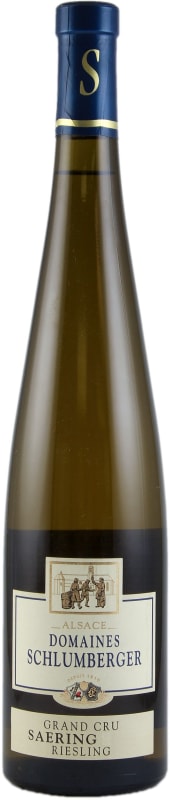


Winemaker Notes
The robe is bright golden yellow with green reflections of good intensity. The disk is bright, limpid and transparent. The wine shows youth.The nose is marked, pleasant and intense. We perceive a dominant of fresh and fruity scents: citrus fruits, lemon zest, lime, and white flowers. The airing enhances the previous scents and evolves into something riper (blood orange) and exotic (papaya) with a very noble mineral and smoky touch. Beautiful ripening of the grapes and excellent state of health. The complex profile of the terroir needs time to express itself and flourish. Patience.The onset in the mouth is moderately ample, round. The alcohol support is full-bodied. The wine evolves on a medium of strict and tense vivacity, with a sparkling note. The range of flavors is similar to that of the nose, still dominated by citrus fruits: lemon zest, yuzu, clementine, blood orange, white flowers, and this superb mineral and smoky definition. We perceive the bitters of the terroir. The finish has a good length, 8-9 caudalies, and a frank liveliness. Typical of its terroir, the balance of this wine is slender and precise. Its aromatic range is still a bit short today. Time will be a good ally.
It can be associated with tempura calamari with crispy vegetables, an Asian-flavoured center-cut salmon fillet, a lobster tail with citrus fruits, but also with a goat's milk cheese... Serving temperature 54°F.
Professional Ratings
-
Wine Enthusiast
Zesty notions of lime peel have a fruity, riper touch of red apple about them. It is these apple flavors that become very expressive and aromatic on the dry concentrated palate. There is lovely midpalate texture that has something of citrus pith about it, while lemon freshness is the central structural element. There is something solid and honest about this. Drink through 2028.
-
James Suckling
Very citrusy and herbal with a hint of wild berries. This is a sleek and tightly wound dry riesling with a serious acidity structure for the hot vintage. If that sounds good to you, this wine has a lot to give right through the long mineral finish. Drink or hold.


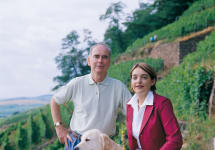
The vineyards of Domaines Schlumberger were originally planted by the Romans and were later controlled by the Prince Abbotts of Murbach, an order of monks who established their seat at the town of Guebwiller in the southern end of Alsace. When the estates of the Abbey were put up for sale after the French Revolution, a local mill owner named Nicolas Schlumberger purchased 20 hectares.
Today, the Nicolas Schlumberger's heirs own and cultivate a 135 hectares spread located over four miles on the steep flanks of the Vosges Mountains. The Schlumberger vineyards are the largest in Alsace, and one of the largest blocks of contiguous vineyards in France. The domaine also has the distinction of owning the largest acreage of Alsace grand cru vineyards, and references to the famous blocks of Kessler, Kitterle and Saering date back to ancient Roman times.
These impressive holdings are the result of efforts devoted over six successive generations of the Schlumberger family. Many growers gave up their property in the late 1800s as they became involved in industrial and commercial activities, leaving the vines to languish untended. In the beginning of the 20th Century, phylloxera further ravaged the vineyards, and war completed the devastation.
In 1911, Ernest Schlumberger undertook the rebuilding of not only the familial vineyards, but the whole of Guebwiller. Over the years, he pieced together more than 2,500 parcels abandoned by their owners. In time, the small domains grew from an original 20 hectares to its present 135 hectares. Today, Schlumberger wines are made exclusively from grapes grown in these estate vineyards.
Planted at altitudes of 750 to 1,450 feet, much of the terraced hillside vineyards above Guebwiller are so steep that driving tractors can be extremely hazardous. Therefore, the domaine uses draught horses specially bred for balance and unaffected by vertigo.
The vineyards are divided into large parcels, each planted to specific Alsace varieties selected according to microclimate and soil characteristics. In general, the soil is light, sandy and porous, ideal for grapes. The natural dryness contributes to the richness and mineral flavor of the wines.
Due to the aridity and steepness of the domaine, production levels at Schlumberger are generally 50% lower than the average in Alsace. By law, Schlumberger could produce 160,000 cases a year from its vineyards, but they limit production to 80,000 cases per annum. Limits dictated both by nature and the domaine result in small yields of very high quality grapes, with an exceptional concentration of flavors.
After harvest, all Domaines Schlumberger wines are fermented and aged in large oak tuns. These large casks have been used in the cellars for decades and are the heart of the Schlumberger cellars.
Domaines Schlumberger is renowned for its luscious wines, full in body and flavor. Their richness and delicate sweetness is balanced by excellent acidity. Therefore, the wines are never cloying or overly heavy. Even the vendange tardive, or late harvest dessert wines - the Gewurztraminers Cuvée Anne and Cuvée Christine capture exquisite honeyed flavors with an ethereal lightness.

Riesling possesses a remarkable ability to reflect the character of wherever it is grown while still maintaining its identity. A regal variety of incredible purity and precision, this versatile grape can be just as enjoyable dry or sweet, young or old, still or sparkling and can age longer than nearly any other white variety. Somm Secret—Given how difficult it is to discern the level of sweetness in a Riesling from the label, here are some clues to find the dry ones. First, look for the world “trocken.” (“Halbtrocken” or “feinherb” mean off-dry.) Also a higher abv usually indicates a drier Riesling.

Small but mighty, this picturesque region in northeastern France is renowned for its white wines produced by passionate families whose winemaking roots span generations and even centuries. Nestled between the Vosges Mountains and the Rhine River, Alsace benefits from a sunny, dry climate and a long growing season. It is one of the most geologically diverse regions in the world — one of the many reasons why Alsace rocks!
Alsace wines include dry, mineral-driven Riesling, earthy Pinot Gris, refreshing Pinot Blanc, exuberant Gewurztraminer, elegant Pinot Noir, and more. From traditional-method sparkling wines to easy-drinking AOC Alsace, to complex Grand Cru bottlings from 51 distinct sites, and rich, late harvest wines, Alsace produces a wine for every occasion. Most Alsace wines are single-varietal bottlings and are labeled with the grape name. The region is also one of the greenest wine-producing areas in France, with 36% of its vineyard area certified organic.
Riesling, the region’s calling card, is dry, fresh and floral in its youth, developing complex mineral and flint character with age. Gewurztraminer is known for its signature spice and lychee aromatics. Pinot Gris is prized for its combination of crisp acidity and savory spice as well as ripe stone fruit flavors. Pinot Blanc is an affable food partner or porch sipper. Pinot Noir, the only red grape in AOC Alsace, is now authorized in three Grand Cru areas and is also used for Crémant d’Alsace sparkling rosé. Any bottle you choose will offer deliciousness, pleasure and value that is unprecedented in other wine regions.