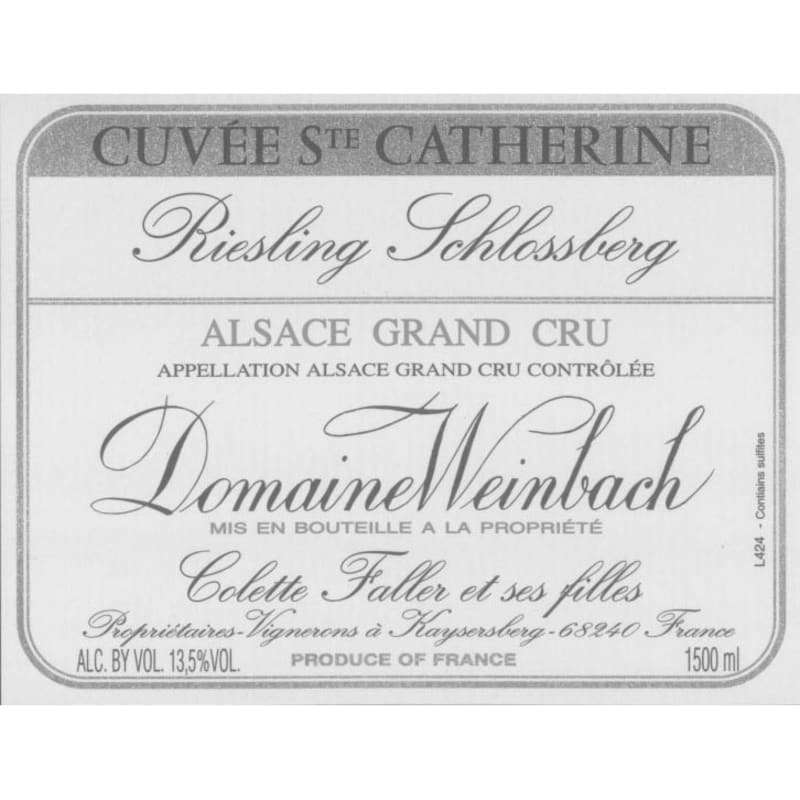

Winemaker Notes
Professional Ratings
-
Robert Parker's Wine Advocate
From largely old vines in the middle slope of the cru, Weinbach's 2005 Riesling Schlossberg Cuvee Saint Catherine smells in a by now very familiar manner of citrus oil, peach kernel, smoke and spice, here with a pineapple overtone. Enormously ripe and lush, with tropical tendencies to its fruit and deep nut oil richness, this nevertheless also displays the most prominent and stony mineral character and the tightest, brightest coil of acidity of any Weinbach 2005 Riesling, and its long finish is truly dry-tasting. This intense beauty should we well worth following – indeed improve – over at least a 12-15 year period, and those (like this taster) who are most fascinated by mature Riesling will – after a prudent interim assessment – probably choose to hold it longer.
-
Wine Spectator
This aromatic white shows lime-tinged flavors of apricot and red grapefruit. The racy acidity keeps it balanced and structured, with a white pepper-filled finish.


Riesling possesses a remarkable ability to reflect the character of wherever it is grown while still maintaining its identity. A regal variety of incredible purity and precision, this versatile grape can be just as enjoyable dry or sweet, young or old, still or sparkling and can age longer than nearly any other white variety. Somm Secret—Given how difficult it is to discern the level of sweetness in a Riesling from the label, here are some clues to find the dry ones. First, look for the world “trocken.” (“Halbtrocken” or “feinherb” mean off-dry.) Also a higher abv usually indicates a drier Riesling.

Small but mighty, this picturesque region in northeastern France is renowned for its white wines produced by passionate families whose winemaking roots span generations and even centuries. Nestled between the Vosges Mountains and the Rhine River, Alsace benefits from a sunny, dry climate and a long growing season. It is one of the most geologically diverse regions in the world — one of the many reasons why Alsace rocks!
Alsace wines include dry, mineral-driven Riesling, earthy Pinot Gris, refreshing Pinot Blanc, exuberant Gewurztraminer, elegant Pinot Noir, and more. From traditional-method sparkling wines to easy-drinking AOC Alsace, to complex Grand Cru bottlings from 51 distinct sites, and rich, late harvest wines, Alsace produces a wine for every occasion. Most Alsace wines are single-varietal bottlings and are labeled with the grape name. The region is also one of the greenest wine-producing areas in France, with 36% of its vineyard area certified organic.
Riesling, the region’s calling card, is dry, fresh and floral in its youth, developing complex mineral and flint character with age. Gewurztraminer is known for its signature spice and lychee aromatics. Pinot Gris is prized for its combination of crisp acidity and savory spice as well as ripe stone fruit flavors. Pinot Blanc is an affable food partner or porch sipper. Pinot Noir, the only red grape in AOC Alsace, is now authorized in three Grand Cru areas and is also used for Crémant d’Alsace sparkling rosé. Any bottle you choose will offer deliciousness, pleasure and value that is unprecedented in other wine regions.