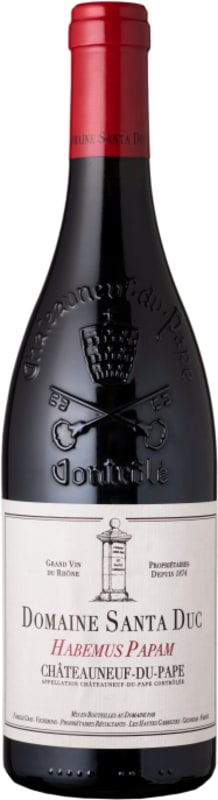


Winemaker Notes
The Provencal translation of La Font du Pape suggests a place where water is to be found, ideal for Syrah, or rather Serines, to express their fresh crispness. Through the emblematic grapes of our region, Grenache and Syrah, this union of terroirs finds it vocation in the coherent and elegant wines that it creates.
Professional Ratings
-
Wine Enthusiast
A pure nose exuding perfectly ripe red fruit, enveloped by black plum, violet and green peppercorn. The palate is immediately greeted with a rush of acidity, rolling in a wave of black cherry, thyme stem, violets, iris, clove and black tea. Though currently a bit wound, it should shine with impressive nuances with additional time in bottle. Undeniably irresistible. Martine’s Wines.
-
James Suckling
Lots of smoke, pepper and blackberries on the nose, but also ripe red berries and dried flowers that expand as it aerates. At once ripe and fleshy, but also silky and graceful. Full-bodied. Underplayed power until you get right to the finish where you feel the beautifully crafted structure. A cuvee of 60% grenache from Le Pradel and 40% syrah from La Font du Pape. 75% whole bunch. Matured in a combination of Stockinger oak foudre and clay amphora. From biodynamically grown grapes with Demeter certification.
-
Wine Spectator
This offers high-toned raspberry tea, bitter cherry and macerated plum overlaying a savory, smoldering core of incense, graphite, singed apple wood and smoke. Glossy and lush, with savory acidity and very fine tannins providing shape. Grenache and Syrah. Drink now through 2030. 400 cases made, 200 cases imported.
-
Jeb Dunnuck
The 2020 Châteauneuf Du Pape Habemus Papam is another vibrant, crunchy wine from this estate. Darker cherries, candied strawberries, and peppery garrigue are just some of the nuances, and it’s medium-bodied, has a supple, elegant, Burgundian, streamlined mouthfeel, fine tannins, and a great finish. It’s impeccably made and, as with the Les Saintes Vierges, is going to benefit from 2-4 years of bottle age and keep for over a decade.
Rating: 92+


With bold fruit flavors and accents of sweet spice, Grenache, Syrah and Mourvèdre form the base of the classic Rhône Red Blend, while Carignan, Cinsault and Counoise often come in to play. Though they originated from France’s southern Rhône Valley, with some creative interpretation, Rhône blends have also become popular in other countries. Somm Secret—Putting their own local spin on the Rhône Red Blend, those from Priorat often include Merlot and Cabernet Sauvignon. In California, it is not uncommon to see Petite Sirah make an appearance.

Famous for its full-bodied, seductive and spicy reds with flavor and aroma characteristics reminiscent of black cherry, baked raspberry, garrigue, olive tapenade, lavender and baking spice, Châteauneuf-du-Pape is the leading sub-appellation of the southern Rhône River Valley. Large pebbles resembling river rocks, called "galets" in French, dominate most of the terrain. The stones hold heat and reflect it back up to the low-lying gobelet-trained vines. Though the galets are typical, they are not prominent in every vineyard. Chateau Rayas is the most obvious deviation with very sandy soil.
According to law, eighteen grape varieties are allowed in Châteauneuf-du-Pape and most wines are blends of some mix of these. For reds, Grenache is the star player with Mourvedre and Syrah coming typically second. Others used include Cinsault, Counoise and occasionally Muscardin, Vaccarèse, Picquepoul Noir and Terret Noir.
Only about 6-7% of wine from Châteauneuf-du-Pape is white wine. Blends and single-varietal bottlings are typically based on the soft and floral Grenache Blanc but Clairette, Bourboulenc and Roussanne are grown with some significance.
The wine of Chateauneuf-du-Pape takes its name from the relocation of the papal court to Avignon. The lore says that after moving in 1309, Pope Clément V (after whom Chateau Pape-Clément in Pessac-Léognan is named) ordered that vines were planted. But it was actually his successor, John XXII, who established the vineyards. The name however, Chateauneuf-du-Pape, translated as "the pope's new castle," didn’t really stick until the 19th century.