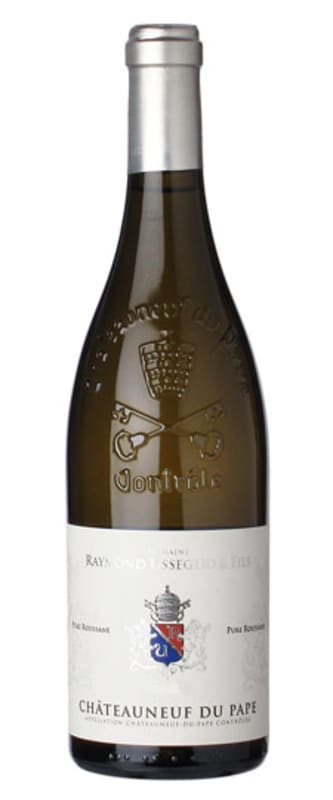


Winemaker Notes
Not your ordinary Chateauneuf-du-Pape Blanc because this wine is from a single varietal – pure Roussanne - vinified and with élevage in barrel several months on the lees, as in Burgundy. From two distinct appellation terroirs, the Chateauneuf-du-Pape Blanc Pure Roussanne is from the marriage of sandy soils with northern exposure and clay soils mixed with large, smooth, rounded stones sloped to the South.
Professional Ratings
-
Jeb Dunnuck
Even better, the 2020 Châteauneuf Du Pape Pure Roussanne (100% Roussanne) offers a vibrant, clean, medium to full-bodied style with a kiss of background oak as well as classy notes of dried pineapple, honeyed pears, sappy herbs, spice, and a touch of minerality. Just about perfectly balanced, with integrated acidity and one heck of a great finish, this is a great, fresher, incredibly elegant example of Roussanne that will benefit from a year in bottle and, I suspect, have 15-20 of overall longevity if stored properly.
-
James Suckling
The intense smoked nuts character of this full-bodied white Chateauneuf-du-Pape makes it stand out. Serious weight and richness here, but they’re typical for the roussanne grape. A citrus freshness keeps it on the straight and narrow at the long finish. From Demeter-certified biodynamically grown grapes.
-
Robert Parker's Wine Advocate
The 2020 Chateauneuf du Pape Pure Roussane—all barrel fermented and aged eight months in new oak—features hints of toast and pencil shavings against a backdrop of white peach, melon and citrus. Medium to full-bodied, it's nicely balanced, with just-right plumpness on the palate, well-judged oak and a long, lingering finish. Tasted blind, I called the drinking window at 2021–2024, but I have updated it to better reflect my experience with the older vintages at the domaine. It might still be conservative. Rating: 92+


There are hundreds of white grape varieties grown throughout the world. Some are indigenous specialties capable of producing excellent single varietal wines. Each has its own distinct viticultural characteristics, as well as aroma and flavor profiles.

Famous for its full-bodied, seductive and spicy reds with flavor and aroma characteristics reminiscent of black cherry, baked raspberry, garrigue, olive tapenade, lavender and baking spice, Châteauneuf-du-Pape is the leading sub-appellation of the southern Rhône River Valley. Large pebbles resembling river rocks, called "galets" in French, dominate most of the terrain. The stones hold heat and reflect it back up to the low-lying gobelet-trained vines. Though the galets are typical, they are not prominent in every vineyard. Chateau Rayas is the most obvious deviation with very sandy soil.
According to law, eighteen grape varieties are allowed in Châteauneuf-du-Pape and most wines are blends of some mix of these. For reds, Grenache is the star player with Mourvedre and Syrah coming typically second. Others used include Cinsault, Counoise and occasionally Muscardin, Vaccarèse, Picquepoul Noir and Terret Noir.
Only about 6-7% of wine from Châteauneuf-du-Pape is white wine. Blends and single-varietal bottlings are typically based on the soft and floral Grenache Blanc but Clairette, Bourboulenc and Roussanne are grown with some significance.
The wine of Chateauneuf-du-Pape takes its name from the relocation of the papal court to Avignon. The lore says that after moving in 1309, Pope Clément V (after whom Chateau Pape-Clément in Pessac-Léognan is named) ordered that vines were planted. But it was actually his successor, John XXII, who established the vineyards. The name however, Chateauneuf-du-Pape, translated as "the pope's new castle," didn’t really stick until the 19th century.