
Winemaker Notes


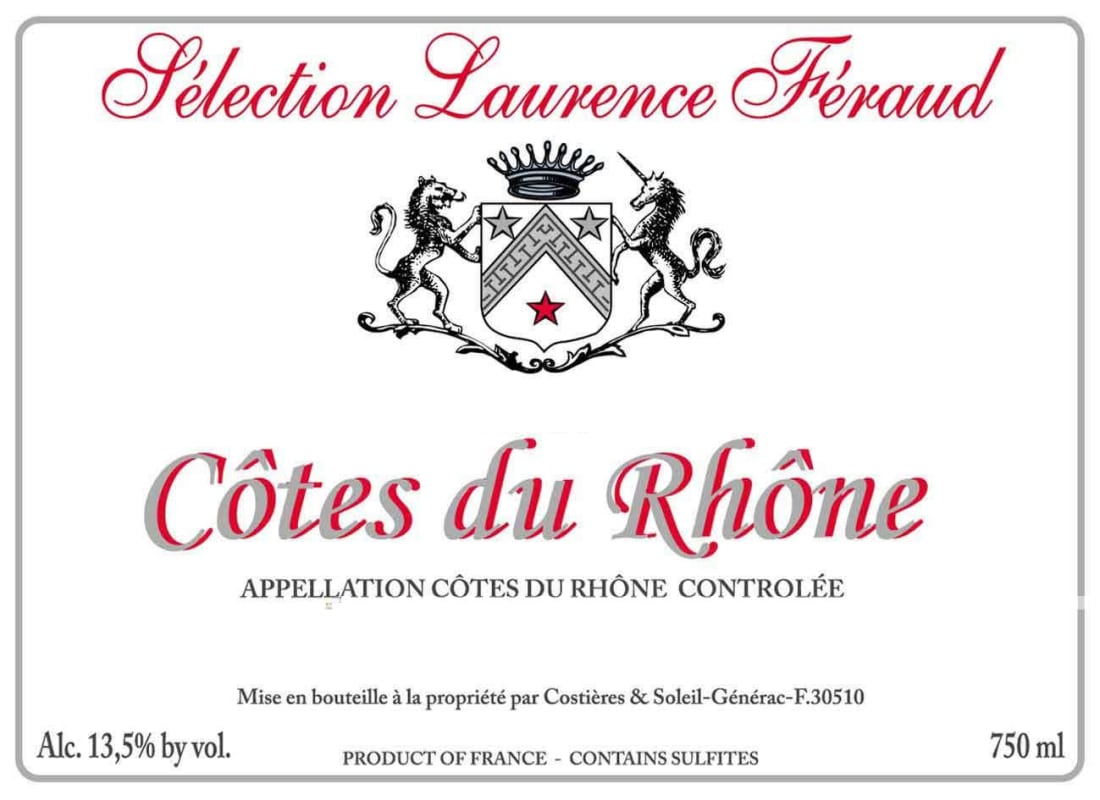
Ancestors of father and daughter team Paul and Laurence Féraud farmed olives, cherries and grapes in Chateauneuf-du-Pape dating back to the 17th century. The methods established centuries ago carry on in the current vintages, creating robust, concentrated, traditional red and white wines. For many years the winery was known as Domaine Feraud fils and they made traditional Chateauneuf-du-Pape.
In 1987 Domaine du Pegau was formed as we know it today, when Laurence Feraud returned from her winemaking studies and she teamed up with her father Paul to create the winery. Complementing each other they have conserved the authenticity and quality of their Chateauneuf-du-Pape whilst bringing it to the attention of wine lovers around the world.

With bold fruit flavors and accents of sweet spice, Grenache, Syrah and Mourvèdre form the base of the classic Rhône Red Blend, while Carignan, Cinsault and Counoise often come in to play. Though they originated from France’s southern Rhône Valley, with some creative interpretation, Rhône blends have also become popular in other countries. Somm Secret—Putting their own local spin on the Rhône Red Blend, those from Priorat often include Merlot and Cabernet Sauvignon. In California, it is not uncommon to see Petite Sirah make an appearance.

Typically thought of as a baby Chateâuneuf-du-Pape, the term Côtes du Rhône actually doesn’t merely apply to the flatter outskirts of the major southern Rhône appellations, it also includes the fringes of well-respected northern Rhône appellations. White wines can be produced under the appellation name, but very little is actually made.
The region offers some of the best values in France and even some first-rate and age-worthy reds. Red wine varieties include most of the Chateâuneuf-du-Pape varieties like Grenache, Syrah, Mourvedre, Cinsault, and Counoise, as well as Carignan. White grapes grown include Grenache blanc, Roussanne and Viognier, among others.