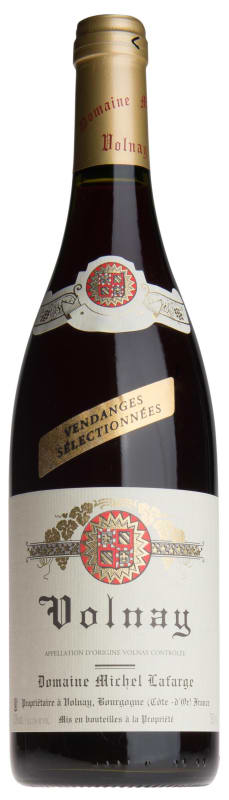


Winemaker Notes
This cuvée is made only in good years when yields are high enough in Volnay to warrant putting aside grapes from the older vines.
Professional Ratings
-
Decanter
All of the parcels that supply fruit for this top-end village wine are over 55 years' old and are located in four terroirs below Volnay's Premiers Crus. Exhibiting some nobel reduction, savoury tannins and the layered. Refreshing red fruit sweetness that's the hallmark of Frédéric Lafarge's wines this has floral top notes and an elegant, refreshing finish.
-
Robert Parker's Wine Advocate
The 2018 Volnay Vendanges Sélectionées is a stunning communal bottling in the making, wafting from the glass with aromas of cassis, cherries, sweet soil tones, raw cocoa and candied citrus peel. On the palate, it's medium to full-bodied, layered and concentrated, with powdery tannins, lively acids and a long, mineral finish. This will be well worth seeking out.
Barrel Sample: 90-92


Thin-skinned, finicky and temperamental, Pinot Noir is also one of the most rewarding grapes to grow and remains a labor of love for some of the greatest vignerons in Burgundy. Fairly adaptable but highly reflective of the environment in which it is grown, Pinot Noir prefers a cool climate and requires low yields to achieve high quality. Outside of France, outstanding examples come from in Oregon, California and throughout specific locations in wine-producing world. Somm Secret—André Tchelistcheff, California’s most influential post-Prohibition winemaker decidedly stayed away from the grape, claiming “God made Cabernet. The Devil made Pinot Noir.”

On the hillsides between Pommard and Meursault, Volnay is one of two villages in the Côte de Beaune of Burgundy that is recognized for its extraordinary Pinot Noir. Pommard is the other; the rest of the villages are most known for some of the most exceptional Chardonnay in the world. While Volnay Pinot Noir tends to be light in color and more delicate than that of Pommard, they typically stand on par with each other in regards to quality and demand.
Volnay can’t claim any Grands Crus vineyards but more than half of it has achieved Premier Cru status. Volnay Premiers Crus vineyards stretch across the entire village from northeast to southwest, abutting and actually falling “into” Meursault. Where they merge is a vineyard called Les Santenots. Pinot Noir grows in this Meursault Premier Cru but since that village is most associated with stellar whites, the Pinot Noir from Les Santenots, takes the name Volnay Santenots. Immediately above it are Volnay’s other prized Premier Cru, Le Cailleret, Champans, Clos des Chênes and Le Cailleret.
Volnay Pinot Noir are earthy with red or blue fruit. Aromas such as smoke, herbs, forest, cocoa and spice are common and on the palate they are gorgeous and concentrated with finesse but won’t truly charm you without some age.