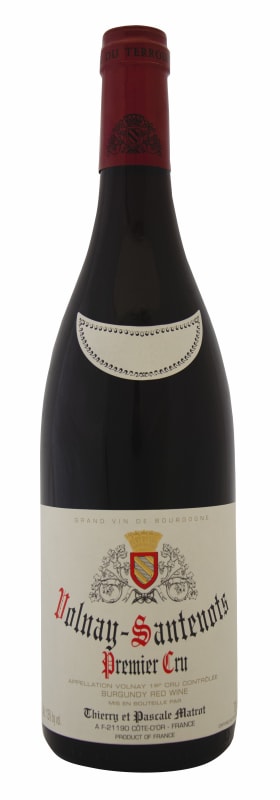


Winemaker Notes
The Volnay Santenots terroir, located in the town of Meursault, produces red wines which are complex. They are rich, well-structured, and elegant. Black fruits dominate the bouquet, underlined by soft and velvety tannins.
Professional Ratings
-
Jeb Dunnuck
The 2016 Volnay Santenots 1er Cru offers more violets, crushed flowers, incense, and forest floor notes, with beautiful purple fruits developing with time in the glass. Medium-bodied, elegant, beautifully balanced and elegant on the palate, with a weightless texture, it’s beautiful, ethereal Volnay to drink over the coming 10-15 years or more.
-
Wine Spectator
This is ripe and plummy, with a patina of oak spice and a buried vein of mineral, propelled by vibrant acidity. Dense, dusty tannins emerge on the finish. Best from 2022 through 2036
-
Wine & Spirits
A rooty Volnay, this wine’s rich cherry-scented fruit is broad, refined and “unambiguously earthy,” as panelist Craig Ganzer described it. As someone who makes a living assessing the value of old wines, he said, “This will taste like a handful of dirt in twenty years, but I like that.” There’s an honesty to the wine that gives it the traditional feel of an artisanal Burgundy.


Thin-skinned, finicky and temperamental, Pinot Noir is also one of the most rewarding grapes to grow and remains a labor of love for some of the greatest vignerons in Burgundy. Fairly adaptable but highly reflective of the environment in which it is grown, Pinot Noir prefers a cool climate and requires low yields to achieve high quality. Outside of France, outstanding examples come from in Oregon, California and throughout specific locations in wine-producing world. Somm Secret—André Tchelistcheff, California’s most influential post-Prohibition winemaker decidedly stayed away from the grape, claiming “God made Cabernet. The Devil made Pinot Noir.”

On the hillsides between Pommard and Meursault, Volnay is one of two villages in the Côte de Beaune of Burgundy that is recognized for its extraordinary Pinot Noir. Pommard is the other; the rest of the villages are most known for some of the most exceptional Chardonnay in the world. While Volnay Pinot Noir tends to be light in color and more delicate than that of Pommard, they typically stand on par with each other in regards to quality and demand.
Volnay can’t claim any Grands Crus vineyards but more than half of it has achieved Premier Cru status. Volnay Premiers Crus vineyards stretch across the entire village from northeast to southwest, abutting and actually falling “into” Meursault. Where they merge is a vineyard called Les Santenots. Pinot Noir grows in this Meursault Premier Cru but since that village is most associated with stellar whites, the Pinot Noir from Les Santenots, takes the name Volnay Santenots. Immediately above it are Volnay’s other prized Premier Cru, Le Cailleret, Champans, Clos des Chênes and Le Cailleret.
Volnay Pinot Noir are earthy with red or blue fruit. Aromas such as smoke, herbs, forest, cocoa and spice are common and on the palate they are gorgeous and concentrated with finesse but won’t truly charm you without some age.