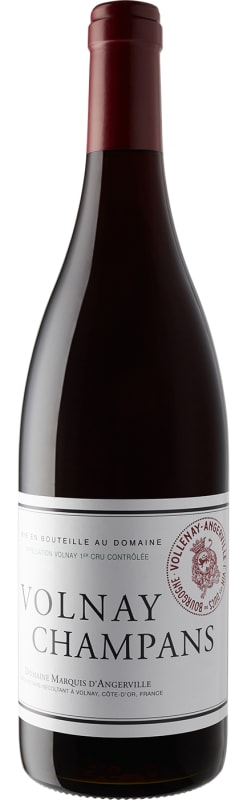


Winemaker Notes
Historically classified as Têtes de Cuvée de Volnay, Champans is the archetype of the great Volnay 1er cru: finesse, fullness and length in the mouth with an extra generosity and power that is unique to it. Depending on the vintage, it deserves 5 to 10 years of aging to fully reveal itself, but it is generally more easily approachable young than Taillepieds or Clos des Ducs.
Professional Ratings
-
Decanter
At just under 4ha, this is the largest holding for the domaine, located in a perfect mid-slope position. The additional ripeness afforded by this privileged location gives the wine an almost lush character on the nose, with dark fruit and an almost chocolaty richness. The texture is expressive and velvety, and there is a bit more heft here than in the Clos des Ducs, although it is not lacking in delicacy by any means.
-
Robert Parker's Wine Advocate
The 2019 Volnay 1er Cru Champans is another wine that's brighter and more refined than its 2018 counterpart, offering up pretty aromas of plums, sweet red berries and peonies, framed by a deft application of creamy oak. Medium to full-bodied, bright and lively, it's unusually fine-boned and refined for what is often one of the more muscular wines in the cellar.
Rating: (92-94)+ -
Jasper Morris
One of the paler colours, with some elegance to the nose, belying the weight of fruit on the palate. Deep rich cherry notes, adequate acidity, a tannin or two also to help the structure, and good length. This required time in the glass to reach its full expression.


Thin-skinned, finicky and temperamental, Pinot Noir is also one of the most rewarding grapes to grow and remains a labor of love for some of the greatest vignerons in Burgundy. Fairly adaptable but highly reflective of the environment in which it is grown, Pinot Noir prefers a cool climate and requires low yields to achieve high quality. Outside of France, outstanding examples come from in Oregon, California and throughout specific locations in wine-producing world. Somm Secret—André Tchelistcheff, California’s most influential post-Prohibition winemaker decidedly stayed away from the grape, claiming “God made Cabernet. The Devil made Pinot Noir.”

On the hillsides between Pommard and Meursault, Volnay is one of two villages in the Côte de Beaune of Burgundy that is recognized for its extraordinary Pinot Noir. Pommard is the other; the rest of the villages are most known for some of the most exceptional Chardonnay in the world. While Volnay Pinot Noir tends to be light in color and more delicate than that of Pommard, they typically stand on par with each other in regards to quality and demand.
Volnay can’t claim any Grands Crus vineyards but more than half of it has achieved Premier Cru status. Volnay Premiers Crus vineyards stretch across the entire village from northeast to southwest, abutting and actually falling “into” Meursault. Where they merge is a vineyard called Les Santenots. Pinot Noir grows in this Meursault Premier Cru but since that village is most associated with stellar whites, the Pinot Noir from Les Santenots, takes the name Volnay Santenots. Immediately above it are Volnay’s other prized Premier Cru, Le Cailleret, Champans, Clos des Chênes and Le Cailleret.
Volnay Pinot Noir are earthy with red or blue fruit. Aromas such as smoke, herbs, forest, cocoa and spice are common and on the palate they are gorgeous and concentrated with finesse but won’t truly charm you without some age.