

Winemaker Notes
Professional Ratings
-
Decanter
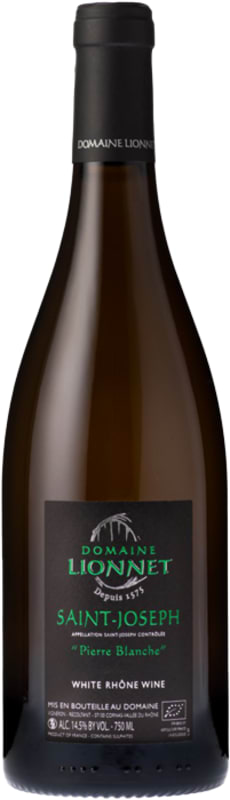
Based in the village of Cornas, this estate is best known for its robust red wines, which come highly recommended. Like the rest of its range, this rare 100% Roussanne St-Joseph is grown organically. The vineyard is in the far south of the appellation in Châteaubourg, not far from the domaine. It’s partly aged in amphora, partly aged in barrique, and offers an irresistibly opulent, spicy expression of the grape. Matt Walls: Enjoyably ripe, with a touch of toastiness. Good freshness and length, a very classic expression, with real depth. Oak is quite forthright, but it works well with the style. Cat Lomax: Ripe peach and stone fruit nose. Good ripeness and intensity. Spicy notes at the back, with a small lick of heat. Tanguy Martin: Nose shows some sweet spices, nutmeg and cinnamon, then complexity and layers on the palate, warm fruits with chestnut and more spices.


Full and silky in body but also charmingly crisp, Roussanne is native to the Rhône Valley of France. It is responsible for some of the finest Northern Rhône white wines. Roussanne adds richness and acidity to Marsanne’s soft, fruitiness, making age worthy and highly respected whites. Somm Secret—Roussanne takes its name from the French word, roux, meaning rouge or red because of the berry’s pink glow. In California, virtually all of the 339 acres of Roussanne come from true clones brought over by Tablas Creek and John Alban.

Spanning the longest stretch of river in the northern Rhône—from Condrieu in the north, to Cornas in the south—the heart of St.-Joseph lies directly across the Rhône River from Hermitage. While its soils are basically the same as Hermitage: granite, supplemented by sand and gravel, its east facing slope receives less sunlight than Hermitage, which causes less overall berry ripening on its Syrah vines. However, some of the best of them can rival any fine expression of Hermitage, Cote-Rotie or Cornas with concentrated black fruits, dark spices, crushed rock and violets. A general advantage of the region is that its Syrahs typically don’t need as much time in the bottle compared to a Cote-Rotie or Hermitage and are much easier on the bank account!
A textbook St.-Joseph red is firm with a core of minerality that is enhanced by savory and peppery qualities. Aromas and flavors of smoke, olives, herbs, and violets are common; its wines are dense in red and black fruit.
St.-Joseph is also a source of fine northern Rhône white wine. Viognier, Marsanne and Roussanne grow well here and can be blended or made into single varietal wines. St.-Joseph whites are full and silky with citrus, pear and pineapple flavors and a rich bouquet reminiscent of honeysuckle, toasted nuts, spice and caramel.