
Winemaker Notes
Professional Ratings
-
Robert Parker's Wine Advocate
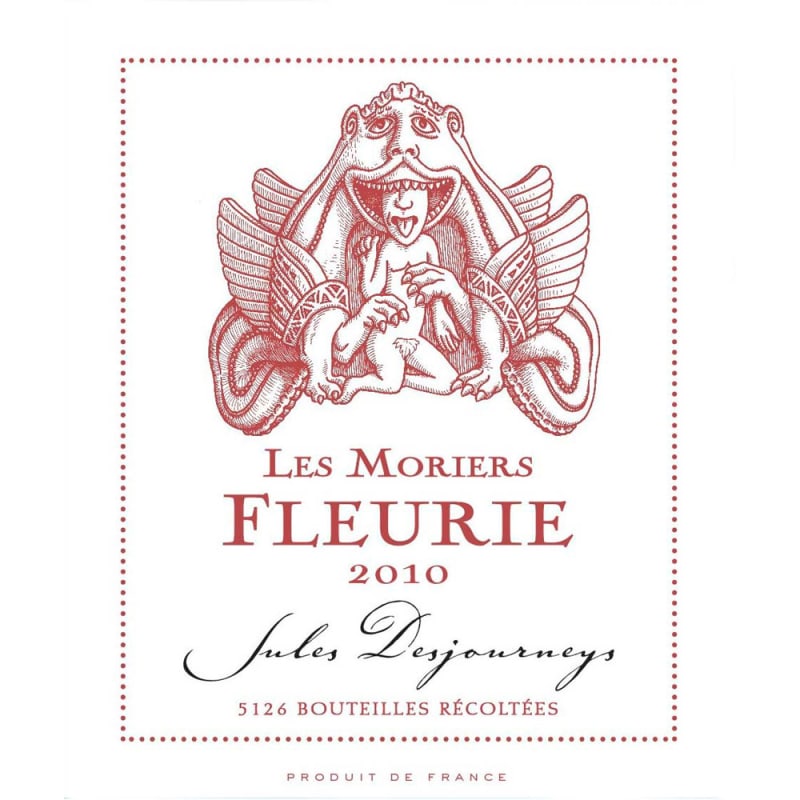
While the corresponding La Chapelle des Bois appeared from cask to have had an edge on Duperray’s 2010 Fleurie Les Moriers Tres Vieilles Vignes, from bottle this dramatically different wine – which he describes as "the nose of Fleurie with the palate of Moulin-a-Vent" – is no less impressive than its immediate sibling. Deeply concentrated plum and cherry fruit are allied to iodine-tinged saline, sweet shrimp shell reduction intimated already in the nose and serving for saliva gland-milking in an amazingly thrusting, gripping finish. White pepper and musky rose radish tweak the nostrils and re-emerge as an invigorating adjunct that encourages me to imagine that a profoundly intense Gruner Veltliner Smaragd had been blended-in. Nutmeg and toasted pecan complement the intense ripeness of fruit, which however never turns superficially sweet thanks in large part to its sheer freshness and to the aforementioned biting invigoration. I would plan on following this at least through 2020.


Delightfully playful, but also capable of impressive gravitas, Gamay is responsible for juicy, berry-packed wines. From Beaujolais, Gamay generally has three classes: Beaujolais Nouveau, a decidedly young, fruit-driven wine, Beaujolais Villages and Cru Beaujolais. The Villages and Crus are highly ranked grape growing communes whose wines are capable of improving with age whereas Nouveau, released two months after harvest, is intended for immediate consumption. Somm Secret—The ten different Crus have their own distinct personalities—Fleurie is delicate and floral, Côte de Brouilly is concentrated and elegant and Morgon is structured and age-worthy.

The bucolic region often identified as the southern part of Burgundy, Beaujolais actually doesn’t have a whole lot in common with the rest of the region in terms of climate, soil types and grape varieties. Beaujolais achieves its own identity with variations on style of one grape, Gamay.
Gamay was actually grown throughout all of Burgundy until 1395 when the Duke of Burgundy banished it south, making room for Pinot Noir to inhabit all of the “superior” hillsides of Burgundy proper. This was good news for Gamay as it produces a much better wine in the granitic soils of Beaujolais, compared with the limestone escarpments of the Côte d’Or.
Four styles of Beaujolais wines exist. The simplest, and one that has regrettably given the region a subpar reputation, is Beaujolais Nouveau. This is the Beaujolais wine that is made using carbonic maceration (a quick fermentation that results in sweet aromas) and is released on the third Thursday of November in the same year as harvest. It's meant to drink young and is flirty, fruity and fun. The rest of Beaujolais is where the serious wines are found. Aside from the wines simply labelled, Beaujolais, there are the Beaujolais-Villages wines, which must come from the hilly northern part of the region, and offer reasonable values with some gems among them. The superior sections are the cru vineyards coming from ten distinct communes: St-Amour, Juliénas, Chénas, Moulin-à-Vent, Fleurie, Chiroubles, Morgon, Regnié, Brouilly, and Côte de Brouilly. Any cru Beajolais will have its commune name prominent on the label.