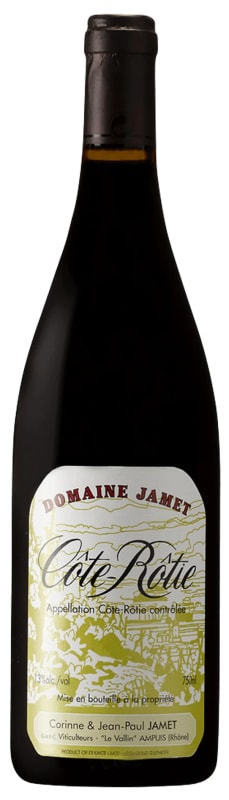


Winemaker Notes
The final blend includes sixteen lieux-dits farmed by the domaine: Gerine, Lesardes, Fongeant, Chavaroche, Côte Bodin, Bonnivières, Le Plomb, Le Truchet, Les Moutonnes, La Landonne, Côte Blonde, Côte Rozier, Leyat, Côte Brune, Tartaras, and Rochins
Professional Ratings
-
Decanter
A tasting of the constituent barrels, so this is a provisional score. Gerine has a touch of cold-fireplace aroma from the stems, the tannins are quite strict and the fruit is fresh; it’s tense. Lésardes and Cumelle show some slightly confit-grape scents and a touch of cassis. Tense and fresh, with good acidity and grippy, slightly grainy tannins that are a touch underripe. Truchet is a cooler terroir, showing a touch of white pepper. It’s fuller and more generous in fruit – juicy blackberry – with softer tannins, but still very fresh and tense. Tartaras and Bonnivières had an October harvest; showing beautiful floral expression, with good ripe fruit and tannins and more richness, but it’s still so fresh. Gerine and Moutonnes are showing peat and iodine notes. It’s silky, with good ripe fruit and tannins and a powerful finish. Fongeant has notes of lavender and violet, then it’s very fresh, silky and attractive – just lovely. Le Plan is fuller-bodied, more classic warm-vintage fruit, with great acidity and tannins. Côte Blonde, Côte Bodin and Leya are lifted, silky, pure, complete and beautiful. Landonne is a relatively fine and fresh expression, not as austere as it can be. Virtually all whole bunches this year. Overall, this is looking like a fresh, elegant vintage, in a fairly classic style, rather than the bolder wines that have typified the past eight years. It promises serious complexity in the long term.
Barrel Sample: 98 -
Jeb Dunnuck
Rich red and black fruits, lots of minerality, pepper, and violets all emerge from the 2023 Côte Rôtie, which saw a lot of stem inclusion and is aging primarily in older demi-muids. It's a focused, masculine effort that's nicely structured and has that fresh, crunchy, yet still ripe style that defines the vintage.
Barrel Sample: 94-96 -
Vinous
This comprehensive tasting note of the 2023 Côte-Rôtie encapsulates impressions from six samples - some from individual lieux-dits, others combining parcels. Le Truchet, sourced from relatively young vines of 14 years, delivers outstanding purity, unfolding with touches of graphite, black cherry and white pepper. Next up is a combination of Côte Bodin, Leyat and Côte Blonde, which adds red plum, stemmy subtleties and a flicker of grapefruit. Gerine then dazzles with fresh acidity, rose petal and spicy undertones. After Gerine, Fongeant represents the second-largest proportion of the entire blend. Slightly less forward than Gerine, Fongeant is savory, with spicy essences, red plum and blackberry, all wrapped in a generous mouthfeel. Tartaras and Bonnivières enrich the picture with fragrant rosewater, cardamom spice and more peppery subtleties. Although aged in a new oak demi-muid, the wood tannins are meticulously integrated into this sample’s structure. Finally, a blend of Le Plomb and Collet completes the picture with licorice, graphite and a touch of black plum. Framed by gentle tannins, these magnificent samples hint at yet another textbook Côte-Rôtie from Jean-Paul, Corinne and Loïc Jamet.
Barrel Sample: 94-96 -
Wine Spectator
Harmonious and pure, with winey, ripe tones of red currant, incense and pretty violet built on a chalky, fine mineral foundation that brings form and drives the length. Texturally stunning, with smoky, savory, olive and herb details; offers impressive integration from start to vibrant finish. Drink now through 2040.


Marked by an unmistakable deep purple hue and savory aromatics, Syrah makes an intense, powerful and often age-worthy red. Native to the Northern Rhône, Syrah achieves its maximum potential in the steep village of Hermitage and plays an important component in the Red Rhône Blends of the south, adding color and structure to Grenache and Mourvèdre. Syrah is the most widely planted grape of Australia and is important in California and Washington. Sommelier Secret—Such a synergy these three create together, the Grenache, Syrah, Mourvedre trio often takes on the shorthand term, “GSM.”

The cultivation of vines here began with Greek settlers who arrived in 600 BC. Its proximity to Vienne was important then and also when that city became a Roman settlement but its situation, far from the negociants of Tain, led to its decline in more modern history. However the 1990s brought with it a revival fueled by one producer, Marcel Guigal, who believed in the zone’s potential. He, along with the critic, Robert Parker, are said to be responsible for the zone’s later 20th century renaissance.
Where the Rhone River turns, there is a build up of schist rock and a remarkable angle that produces slopes to maximize the rays of the sun. Cote Rotie remains one of the steepest in viticultural France. Its varied slopes have two designations. Some are dedicated as Côte Blonde and others as Côte Brune. Syrahs coming from Côte Blonde are lighter, more floral, and ready for earlier consumption—they can also include up to 20% of the highly scented Viognier. Those from Côte Brune are more sturdy, age-worthy and are typically nearly 100% Syrah. Either way, a Cote Rotie is going to have a particularly haunting and savory perfume, expressing a more feminine side of the northern Rhone.