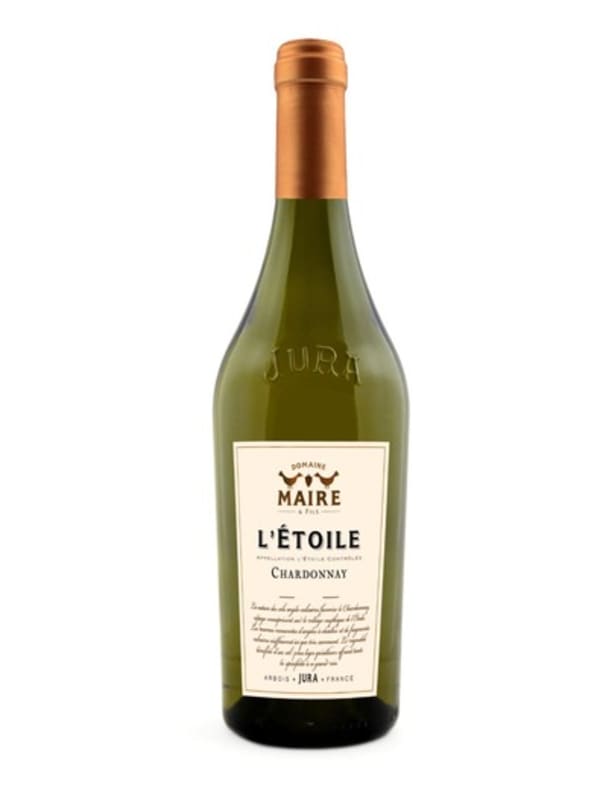


Winemaker Notes
With a clear and brilliant colour, this wine presents green and pale gold reflections. Its complex nose reveals finesse and minerality. In the mouth its attack is frank and opens on mineral notes and dried fruit. This wine has a good amplitude and a very long persistence.
Blend: 90% Chardonnay, 10% Savagnin
Professional Ratings
-
Jeb Dunnuck
An impressive Chardonnay, the 2018 Chardonnay L'Etoile offers quality notes of pear, citrus blossom, and salty minerality in a medium-bodied, fresh, bright, crisp package. It's going to shine on the dinner table and has a terrific mix of freshness and richness as well as a salty finish that makes you salivate.


One of the most popular and versatile white wine grapes, Chardonnay offers a wide range of flavors and styles depending on where it is grown and how it is made. While it tends to flourish in most environments, Chardonnay from its Burgundian homeland produces some of the most remarkable and longest lived examples. California produces both oaky, buttery styles and leaner, European-inspired wines. Somm Secret—The Burgundian subregion of Chablis, while typically using older oak barrels, produces a bright style similar to the unoaked style. Anyone who doesn't like oaky Chardonnay would likely enjoy Chablis.

On the foothills of the Jura Mountains, just east of the Cote de Beaune on the Switzerland border, the Jura wine-producing zone is recognized for its unique reds, as well as its particular and diverse styles of whites.
Though borrowed from their neighbor Burgundy, Chardonnay and Pinot noir have been growing in Jura since the Middle Ages. But here the altitude, topography, climate and clay-rich, marl soils support a different style of Pinot noir, not to mention its other deeply-colored, full-bodied indigenous reds, Poulsard and Trousseau.
Considering area under vine, growers here favor Chardonnay for its consistency and reliability; it comprises almost half of Jura's vineyard acreage. However, Jura Chardonnay is anything but boring; its many offbeat styles are part of what make region’s wines so distinctive. It is used for Cremant (sparkling), Macvin (a fortified wine), as well as fine examples at the quality level of Burgundy.
Jura also has a unique oxidative style for Chardonnay but is better recognized for its similarly-styled “vin jaune,” meaning ‘yellow wine,’ which is made from the indigenous variety, Savagnin. Vin jaune is made using techniques similar to those used to make Sherry.
For all of its wines, Jura favors a traditional, natural and often organic style in viticulture and winemaking.