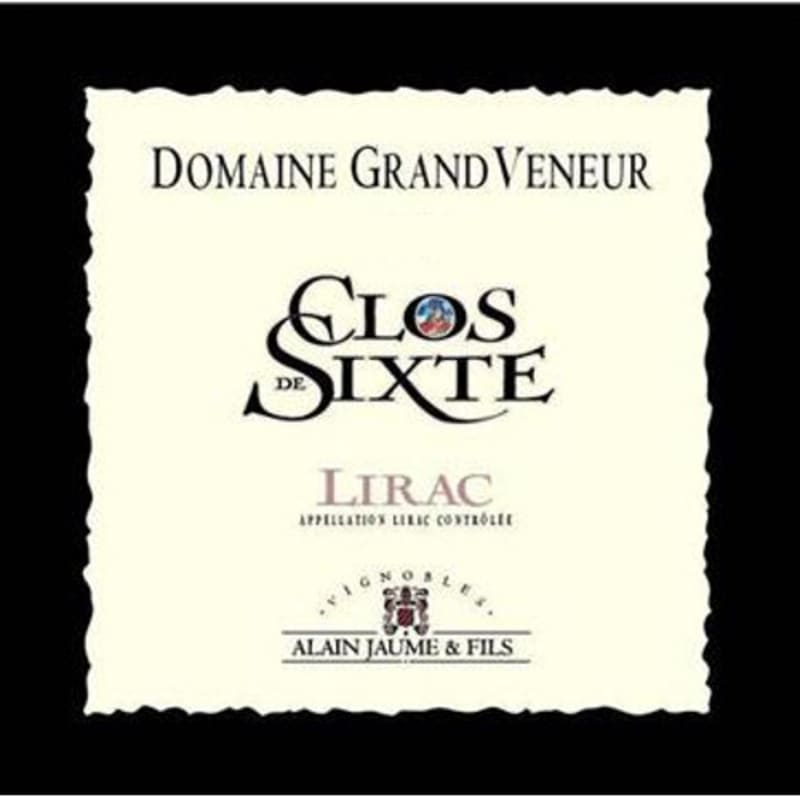

Winemaker Notes
Professional Ratings
-
Wine Enthusiast
Filled with wonderfully ripe fruit, yet fresh and floral in character, this is a top example of Lirac. Black cherry fruit forms the core, supported by firm acids and tannins and accented by hints of licorice on the long finish. Drink now-2020.
Editors' Choice -
Robert Parker's Wine Advocate
The Lirac 2009 Clos de Sixte may look expensive, but this is a sensational wine capable of lasting for a decade or more. A blend of 50% Grenache, 35% Syrah and the rest Mourvedre, the wine has a dense purple color, a big, sweet kiss of garrigue, blackberries, kirsch, barbecue smoke, damp earth, and wild strawberries. Full-bodied, with velvety tannins as well as real opulence and power, this is a big, fleshy Lirac that should evolve beautifully for up to a decade or more.
-
Wine Spectator
This displays nice range, featuring layers of dark fig, raspberry and blackberry fruit woven with graphite and roasted espresso notes. Nicely buried acidity keeps the finish driving along. Drink now through 2012. 7,000 cases made.


With bold fruit flavors and accents of sweet spice, Grenache, Syrah and Mourvèdre form the base of the classic Rhône Red Blend, while Carignan, Cinsault and Counoise often come in to play. Though they originated from France’s southern Rhône Valley, with some creative interpretation, Rhône blends have also become popular in other countries. Somm Secret—Putting their own local spin on the Rhône Red Blend, those from Priorat often include Merlot and Cabernet Sauvignon. In California, it is not uncommon to see Petite Sirah make an appearance.

A long and narrow valley producing flavorful red, white, and rosé wines, the Rhône is bisected by the river of the same name and split into two distinct sub-regions—north and south. While a handful of grape varieties span the entire length of the Rhône valley, there are significant differences between the two zones in climate and geography as well as the style and quantity of Rhône wines produced. The Northern Rhône, with its continental climate and steep hillside vineyards, is responsible for a mere 5% or less of the greater region’s total output. The Southern Rhône has a much more Mediterranean climate, the aggressive, chilly Mistral wind and plentiful fragrant wild herbs known collectively as ‘garrigue.’
In the Northern Rhône, the only permitted red variety is Syrah, which in the appellations of St.-Joseph, Crozes-Hermitage, Hermitage, Cornas and Côte-Rôtie, it produces velvety black-fruit driven, savory, peppery red wines often with telltale notes of olive, game and smoke. Full-bodied, perfumed whites are made from Viognier in Condrieu and Château-Grillet, while elsewhere only Marsanne and Roussanne are used, with the former providing body and texture and the latter lending nervy acidity. The wines of the Southern Rhône are typically blends, with the reds often based on Grenache and balanced by Syrah, Mourvèdre, and an assortment of other varieties. All three northern white varieties are used here, as well as Grenache Blanc, Clairette, Bourbelenc and more. The best known sub-regions of the Southern Rhône are the reliable, wallet-friendly Côtes du Rhône and the esteemed Châteauneuf-du-Pape. Others include Gigondas, Vacqueyras and the rosé-only appellation Tavel.