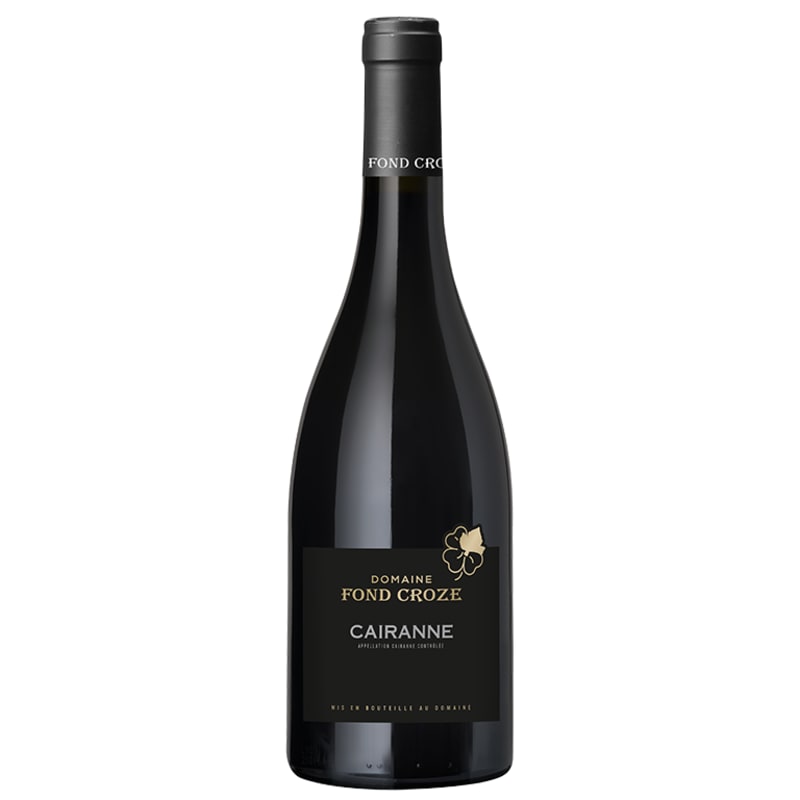


Winemaker Notes
This wine has a deep garnet color with purplish hues. The first nose is complex and after a slight aeration it releases aromas of stewed small black fruits and candied cherry. On the palate, we detect a nice acidity with well-present and structured tannins. This wine offers aromas of black fruits as well as toasted notes on the finish. Complex and well balanced, the finish is long.
Professional Ratings
-
Jeb Dunnuck
Beautiful red and blue fruits, spring flowers, chalky minerality, and subtle peppery notes all emerge from the 2022 Cairanne, another incredibly elegant wine from this team. Medium-bodied with fine yet present tannins, as well as integrated acidity, drink this total charmer over the coming 5-7 years.
Range: 90-92 -
James Suckling
Fruity, textural and pure red wine. Aromas of cherries, cassis, strawberries and hints of melted chocolate. Medium-bodied with creamy tannins. Melty and velvety with a delicate core of berries and spices developing throughout. From organically grown grapes. Juicy finish. Drink or hold.
-
Robert Parker's Wine Advocate
Fond Croze's 2022 Cairanne is another fine effort from this outstanding property. Great fruit in the form of raspberries and cherries marks the nose of this Grenache-led blend (it does include 25% each Carignan and Mourvèdre), while the full-bodied and concentrated palate is silky textured, finishing lush and long.


With bold fruit flavors and accents of sweet spice, Grenache, Syrah and Mourvèdre form the base of the classic Rhône Red Blend, while Carignan, Cinsault and Counoise often come in to play. Though they originated from France’s southern Rhône Valley, with some creative interpretation, Rhône blends have also become popular in other countries. Somm Secret—Putting their own local spin on the Rhône Red Blend, those from Priorat often include Merlot and Cabernet Sauvignon. In California, it is not uncommon to see Petite Sirah make an appearance.

A long and narrow valley producing flavorful red, white, and rosé wines, the Rhône is bisected by the river of the same name and split into two distinct sub-regions—north and south. While a handful of grape varieties span the entire length of the Rhône valley, there are significant differences between the two zones in climate and geography as well as the style and quantity of Rhône wines produced. The Northern Rhône, with its continental climate and steep hillside vineyards, is responsible for a mere 5% or less of the greater region’s total output. The Southern Rhône has a much more Mediterranean climate, the aggressive, chilly Mistral wind and plentiful fragrant wild herbs known collectively as ‘garrigue.’
In the Northern Rhône, the only permitted red variety is Syrah, which in the appellations of St.-Joseph, Crozes-Hermitage, Hermitage, Cornas and Côte-Rôtie, it produces velvety black-fruit driven, savory, peppery red wines often with telltale notes of olive, game and smoke. Full-bodied, perfumed whites are made from Viognier in Condrieu and Château-Grillet, while elsewhere only Marsanne and Roussanne are used, with the former providing body and texture and the latter lending nervy acidity. The wines of the Southern Rhône are typically blends, with the reds often based on Grenache and balanced by Syrah, Mourvèdre, and an assortment of other varieties. All three northern white varieties are used here, as well as Grenache Blanc, Clairette, Bourbelenc and more. The best known sub-regions of the Southern Rhône are the reliable, wallet-friendly Côtes du Rhône and the esteemed Châteauneuf-du-Pape. Others include Gigondas, Vacqueyras and the rosé-only appellation Tavel.