

Winemaker Notes
Professional Ratings
-
Decanter
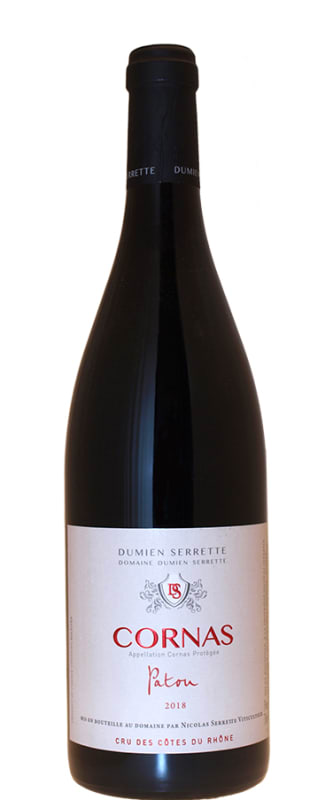
Agreeably old-school style, this has liquorice and herbal bitters on the nose, and is less overtly fruity than some 2018s. A fresh, neat and upright style of Cornas with real impact on the palate, very tight and focussed. Highly saline. There's no excess fat or fruit here, it's all trimmed away to expose the mineral core. Blackcurrant and blackcurrant leaf, this has intense mineral drive and great freshness. Really exceptional, excellent work coming from this domaine lately. Drinkable now, but will be at its best from 2026. A small domaine of 1.5ha, this is from lieu-dit Patou, southeast facing, partly destemmed, fermented in concrete, aged for a year in barriques.
-
Jeb Dunnuck
Not yet bottled, the 2018 Cornas Patou is head-turning stuff, with thrilling amounts of blue and black fruits, ground herbs, pepper, and beef blood aromas and flavors. Rich, full-bodied, and concentrated, it's a rockingly good wine. This cuvée comes from granite soils and very old vines (average of 80 years in age) and is vinified all in concrete and aged in used oak. It’s straight-up classic juice well worth seeking out and cellaring.
Barrel Sample: 93-95


Marked by an unmistakable deep purple hue and savory aromatics, Syrah makes an intense, powerful and often age-worthy red. Native to the Northern Rhône, Syrah achieves its maximum potential in the steep village of Hermitage and plays an important component in the Red Rhône Blends of the south, adding color and structure to Grenache and Mourvèdre. Syrah is the most widely planted grape of Australia and is important in California and Washington. Sommelier Secret—Such a synergy these three create together, the Grenache, Syrah, Mourvedre trio often takes on the shorthand term, “GSM.”

Distinguished as a fine Syrah producing zone since the 18th century, Cornas, like Cote Rotie, is made up of vineyards covering steep and hard-to-work, granite terraces. As a result the region’s wines fell out of favor during the mid 20th century when the global market was more focused on bulk wines and vineyards that yielded high quantities. It wasn’t until the 1980s when a group of energetic young winemakers reestablished the integrity of these precipitous terraces and also began making an ultra-modern style of Syrah. The new style didn’t need a decade before it was drinkable and could reach the consumer faster than the region’s traditional wines. Given the new quality coming out of the zone, its popularity once again soared and today a good Cornas can easily challenge many of those from Hermitage. Characteristics of Syrah from Cornas include teeth-staining flavors of blackberry jam, plum, pepper, violets, smoked game, charcoal, chalk dust and smoke.