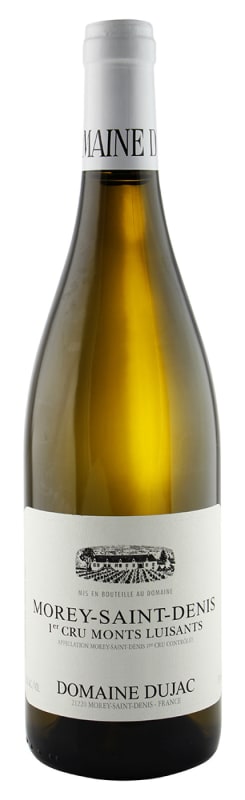


Winemaker Notes
Grown on soils of clay & limestone. Fermented in stainless steel tanks, using naturally occurring yeast and aged 18 months in 1, 2 and 3 year old French barrique. Bottled unfined and unfiltered.
Professional Ratings
-
Decanter
This wine is not what you'd expect from such a hot and dry year, yet the concentration of the grapes concentrated the acidity, too, and the result is a wine of tension and power that should age exceptionally well. No one will blame you, however, for opening a few bottles early. Unlike the white premier cru from Ponsot in this appellation, this is 100% Chardonnay from the 0.6ha Dujac holding. The wine is fermented in tank and aged in used casks. In 2020, the wine took me by surprise with its vibrant, lemony fruit and minerality.
-
Robert Parker's Wine Advocate
The 2020 Morey-Saint-Denis 1er Cru Monts Luisants Blanc is excellent, delivering scents of pear, freshly baked bread and citrus oil, followed by a medium-bodied, taut and chalky palate built around a bright spine of acidity.
Barrel Sample: 92-94 -
Jasper Morris
Mostly young vines. Light, pale primrose colour. After the scintillating Morey St-Denis Monts Luisants, the bouquet here seems a little subdued. Sweeter ripe fruit with a bit of oak and good acidity behind.
Barrel Sample: 90-92


One of the most popular and versatile white wine grapes, Chardonnay offers a wide range of flavors and styles depending on where it is grown and how it is made. While it tends to flourish in most environments, Chardonnay from its Burgundian homeland produces some of the most remarkable and longest lived examples. California produces both oaky, buttery styles and leaner, European-inspired wines. Somm Secret—The Burgundian subregion of Chablis, while typically using older oak barrels, produces a bright style similar to the unoaked style. Anyone who doesn't like oaky Chardonnay would likely enjoy Chablis.

While Morey-St-Denis of Burgundy might not get the same attention as its neighbors, Gevrey-Chambertin to the north and Chambolle-Musigny to the south, there is no reason why it shouldn’t. The same line of limestone runs from the Combe de Lavaux in Gevrey—all the way through Morey—ending in Chambolle.
There are four grand cru vineyards, moving southwards from the border with Gevrey-Chambertin: Clos de la Roche, Clos St-Denis, Clos des Lambrays, Clos de Tart and a small segment of Bonnes-Mares overlapping from Chambolle. Clos de la Roche is probably the finest vineyard, giving wines of true depth, body, and sturdiness for the long haul than most other vineyards.
Pinot Noir from Morey-St-Denis is known for its deep red cherry, blackcurrant and blueberry fruit. Aromas of spice, licorice and purple flowers are present in the wines’ youth, evolving to forest and game as the wine ages.