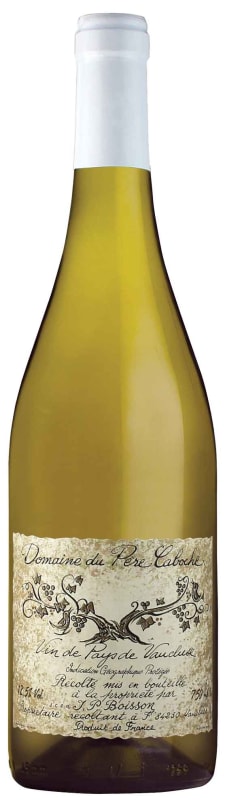


Winemaker Notes
The color is bright and pale yellow with sustained green highlights. The nose is intense and complex with hints of white flower and aromas of apricot with a nice touch of orange blossom. The mouth is smooth and well-balanced between freshness, white flesh fruit aromas and delicate floral notes. The finish is full and smooth with flavors of citrus fruit.
Professional Ratings
-
Wilfred Wong of Wine.com
The 2023 Domaine du Père Caboche Blanc, made from 100% Sauvignon Blanc, is crisp and clean. Enjoy this with a fresh lemon-accented crab meat salad. (Tasted: October 30, 2024, San Francisco, CA)


Jean-Pierre Boisson, former long-serving mayor of Châteauneuf-du-Pape, runs Domaine Père Caboche with his children Emily & Nicolas. Members of the Boisson family have been both winemakers and blacksmiths for generations. The family nickname of Caboche derives from the old Provençal word for ‘horseshoe nails’ and their Vieilles Vignes cuvée is named after Elisabeth Chambellan, a local blacksmith’s daughter who married Jean-Louis Boisson in 1772.
"Since 1772, we have had parcels that have remained in the family, without there being any exchange or sale. The vines which are still there now are over 100 years old and produce an outstanding wine. The oldest parcel was planted in 1906. As a tribute and thanks to Elisabeth, we are today vine-growers from father to son and daughter." On the Châteauneuf du Pape appellation, the Domaine du Père Caboche vineyard is covered with rolled pebbles on 17 hectares, with the greatest density on the famous soil of La Crau. They contribute to the density and fullness of our wines. On this sea of pebbles, the vineyard still offers different products, thanks to the different layers in the underground. The clay-calcareous soil helps the vines with their water retaining properties, which has become more and more important with climatic changes. Thus the wines appear to be softer in the mouth. Sand is also present in proportions changing from one soil to another, bringing notes of elegance and finesse.

Capable of a vast array of styles, Sauvignon Blanc is a crisp, refreshing variety that equally reflects both terroir and varietal character. Though it can vary depending on where it is grown, a couple of commonalities always exist—namely, zesty acidity and intense aromatics. This variety is of French provenance. Somm Secret—Along with Cabernet Franc, Sauvignon Blanc is a proud parent of Cabernet Sauvignon. That green bell pepper aroma that all three varieties share is no coincidence—it comes from a high concentration of pyrazines (herbaceous aromatic compounds) inherent to each member of the family.

French wine is nearly synonymous with fine wine and all things epicurean, France has a culture of wine production and consumption that is deeply rooted in tradition. Many of the world’s most beloved grape varieties originated here, as did the concept of “terroir”—soil type, elevation, slope and mesoclimate combine to produce resulting wines that convey a sense of place. Accordingly, most French wine is labeled by geographical location, rather than grape variety. So a general understaning of which grapes correspond to which regions can be helpful in navigating all of the types of French wine. Some of the greatest wine regions in the world are here, including Bordeaux, Burgundy, the Rhône and Champagne, but each part of the country has its own specialties and strengths.
Pinot Noir and Chardonnay are the king and queen of Burgundy, producing elegant French red and white wines with great acidity, the finest examples of which can age for decades. The same two grapes, along with Pinot Meunier, are used to make Champagne.
Of comparable renown is Bordeaux, focused on bold, structured red blends of Cabernet Sauvignon, Merlot, Cabernet Franc including sometimes a small amount of Petit Verdot or Malbec. The primary white varieties of Bordeaux are Sauvignon Blanc and Sémillon.
The northern Rhône Valley is responsible for single-varietal Syrah, while the south specializes in Grenache blends; Rhône's main white variety is Viognier.
Most of these grape varieties are planted throughout the country and beyond, extending their influence into other parts of Europe and New World appellations.