

Winemaker Notes
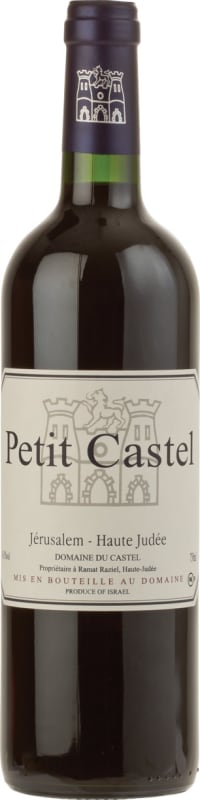
The Petit Castel is a full-bodied wine, bearing a hint of tannin and a harmonic fruity-oak balance, with a deep royal purple color. The wine is at its peak about 3-5 years from harvest and decanting is recommended before serving.
This wine is Kosher for Passover
Professional Ratings
-
James Suckling
This marries beautifully the generosity that Bordeaux blends from warmer regions have, with herbal freshness and subtle savory and licorice notes. The fine tannins and lively acidity gel nicely on the medium-to full-bodied palate and the finish is long and elegant. Drink or hold.
-
Wine Enthusiast
This wine is red-violet to the eye. Aromas of black cherry and violet set the scene for flavors of black plum, raspberry, lavender, roasted red pepper and a touch of smoke, with a framework of bold tannins. The finish is marked by a touch of flint.
-
Wine Spectator
Marked by both power and focus, with red berry and currant notes flanked with graphite, cedar and savory spice elements all supported by taught tannins. Details of underbrush and black tea give depth to the structured finish. Merlot, Cabernet Sauvignon and Petit Verdot.


One of the world’s most classic and popular styles of red wine, Bordeaux-inspired blends have spread from their homeland in France to nearly every corner of the New World. Typically based on either Cabernet Sauvignon or Merlot and supported by Cabernet Franc, Malbec and Petit Verdot, the best of these are densely hued, fragrant, full of fruit and boast a structure that begs for cellar time. Somm Secret—Blends from Bordeaux are generally earthier compared to those from the New World, which tend to be fruit-dominant.

With a rich history of wine production dating back to biblical times, Israel is a part of the cradle of wine civilization. Here, wine was commonly used for religious ceremonies as well as for general consumption. During Roman times, it was a popular export, but during Islamic rule around 1300, production was virtually extinguished. The modern era of Israeli winemaking began in the late 19th century with help from Bordeaux’s Rothschild family. Accordingly, most grapes grown in Israel today are made from native French varieties. Indigenous varieties are all but extinct, though oenologists have made recent attempts to rediscover ancient varieties such as Marawi for commercial wine production.
In Israel’s Mediterranean climate, humidity and drought can be problematic, concentrating much of the country’s grape growing in the north near Galilee, Samaria near the coast and at higher elevations in the east. The most successful red varieties are Cabernet Sauvignon, Merlot, and Syrah, while the best whites are made from Chardonnay and Sauvignon Blanc. Many, though by no means all, Israeli wines are certified Kosher.