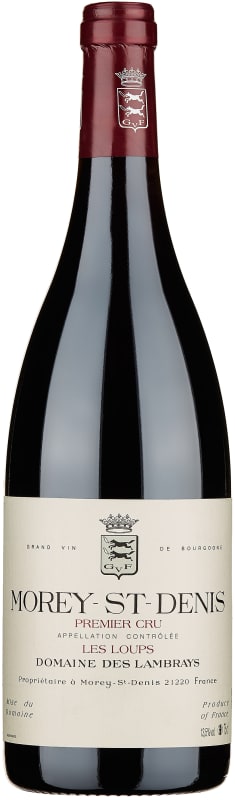


Winemaker Notes
The wine is highly aromatic, expressive, and intense, with a luscious, rich, and silky mouthfeel that demonstrates remarkable balance.
Professional Ratings
-
Jasper Morris
Half of this production comes from actual 1er Cru vines, made with whole bunches, and the other half comes from the young vines (2000) in the Clos, “Les 30 rangs”, and these grapes were destemmed. Mid crimson, a gorgeous bouquet showing the crushed strawberry style of stems. A slightly raw finish but still a big step up from the village Morey.
Barrel Sample: 92-94 -
Decanter
The Morey premier cru from Lambrays has better density than the village-level wine; there is a ripe plummy fruit with notes of liquorice underlined with a note of dark chocolate. The texture has more weight and substance, and the tannins linger pleasantly on the finish. The wine is a blend of 50% declassified young vines from the Clos along with parcels owned in Morey premiers crus, including Les Riottes, Les Sorbès and Le Village, with half of the grapes fermented as whole clusters.
-
Wine Spectator
Laced with black cherry, blackberry, sandalwood, mineral and oak spice aromas and flavors, this fresh, complex red is suave and harmonious. Offering a lingering aftertaste, this needs time to integrate all the elements. Best from 2027 through 2045. 110 cases imported.
-
Robert Parker's Wine Advocate
Aromas of rose petals, sweet red berries, cinnamon and clove introduce the 2021 Morey-Saint-Denis 1er Cru Les Loups, a medium to full-bodied, ample and fleshy wine that's supple and perfumed, structured around powdery tannins and concluding with a saline finish.
Barrel Sample: 90-92


Thin-skinned, finicky and temperamental, Pinot Noir is also one of the most rewarding grapes to grow and remains a labor of love for some of the greatest vignerons in Burgundy. Fairly adaptable but highly reflective of the environment in which it is grown, Pinot Noir prefers a cool climate and requires low yields to achieve high quality. Outside of France, outstanding examples come from in Oregon, California and throughout specific locations in wine-producing world. Somm Secret—André Tchelistcheff, California’s most influential post-Prohibition winemaker decidedly stayed away from the grape, claiming “God made Cabernet. The Devil made Pinot Noir.”

While Morey-St-Denis of Burgundy might not get the same attention as its neighbors, Gevrey-Chambertin to the north and Chambolle-Musigny to the south, there is no reason why it shouldn’t. The same line of limestone runs from the Combe de Lavaux in Gevrey—all the way through Morey—ending in Chambolle.
There are four grand cru vineyards, moving southwards from the border with Gevrey-Chambertin: Clos de la Roche, Clos St-Denis, Clos des Lambrays, Clos de Tart and a small segment of Bonnes-Mares overlapping from Chambolle. Clos de la Roche is probably the finest vineyard, giving wines of true depth, body, and sturdiness for the long haul than most other vineyards.
Pinot Noir from Morey-St-Denis is known for its deep red cherry, blackcurrant and blueberry fruit. Aromas of spice, licorice and purple flowers are present in the wines’ youth, evolving to forest and game as the wine ages.