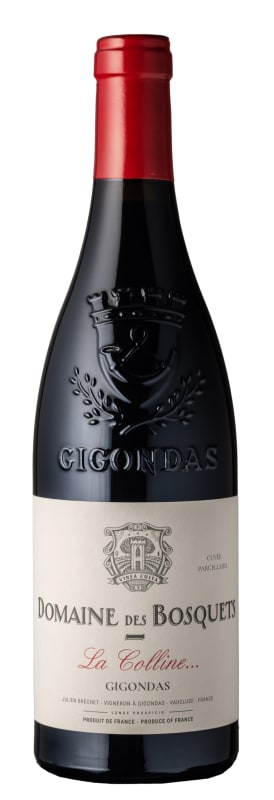


Winemaker Notes
The Hill (La Colline) has been produced since 2013, a vintage that allowed us to discover all its singularity, a bit by chance... Grenache pure too, but on limestone marls of altitude, and more exposed. This time we are in a more Rhodanian register, where King Grenache expresses all his intensity, while remaining chiseled by the salinity of the limestone, and fresh with the help of altitude.
Professional Ratings
-
Jeb Dunnuck
A wine I’d put up with anything from the Southern Rhône, the 2019 Gigondas La Colline boasts a vivid ruby/purple hue as well as a sensational bouquet of black raspberries, Provençal garrigue, toasted spices, and flowery incense. It’s full-bodied and opulent, yet as seamless and balanced as they come. Based on a single parcel of Grenache vines aged 18 months in dem-muids, it’s a magical Gigondas to enjoy over the coming 15+ years. Best after 2038.
-
Robert Parker's Wine Advocate
Considering the heat of the year, the 2019 Gigondas La Colline is remarkably fresh and fragrant, with stunning garrigue notes joining hints of rose petals and citrus zest to accent raspberries and red plums. It's wonderfully silky and even airy feeling on the medium to full-bodied palate, despite what must be 15% alcohol. Aged in used demi-muids, there's no oak flavor, just a pleasant, smooth mouthfeel and a long, refreshing finish.
Range: 94-96 -
Wine Spectator
This is nicely packed, with a range of dark plum, boysenberry preserve and cherry pate de fruit flavors pumping through, all carried by fine, racy and thoroughly imbedded chalky minerality. The structure lets the fruit play out while additional floral, tea and anise notes swirl in on the finish. A beauty. Drink now.


Grenache thrives in any warm, Mediterranean climate where ample sunlight allows its clusters to achieve full phenolic ripeness. While Grenache's birthplace is Spain (there called Garnacha), today it is more recognized as the key player in the red blends of the Southern Rhône, namely Châteauneuf-du-Pape, Côtes du Rhône and its villages. Somm Secret—The Italian island of Sardinia produces bold, rustic, single varietal Grenache (there called Cannonau). California, Washington and Australia have achieved found success with Grenache, both flying solo and in blends.

The Southern Rhône region of Gigondas extends northwest from the notably jagged wall of mountains called the Dentelles di Montmirail, whose highest point climbs to about 2,600 feet. The region and its wines have much in common with the neighboring Chateauneuf-du-Pape except that the vineyards of Gigondas exist at higher elevation and its soils, comprised mainly of crumbled limestone from the Dentelles, often produce a more dense and robust Grenache-based red wine.
The region has a history of fine winemaking, extending back to Roman times. But by the 20th century, Gigondas was merely lumped into the less distinct zone of Côtes du Rhône Villages. However, it was first among these satellite villages to earn its own appellation, which occurred in 1971.
Gigondas reds must be between 50 to 100% Grenache with Syrah and Mourvèdre comprising the bulk of the remainder of the blend. They tend express rustic flavors and aromas of wild blackberry, raspberry, fig, plum, as well as juniper, dried herbs, anise, smoke and river rock. The best are bold but balanced, and finish with impressively sexy and velvety tannins.
The Gigondas appellation also produces rosé but no white wines.