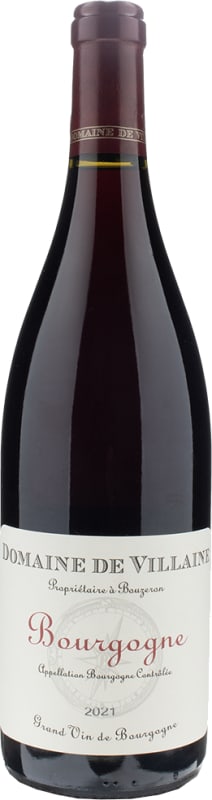


Winemaker Notes
Professional Ratings
-
Decanter
This is a wine of true elegance, with a light ruby hue, bright, perfumed cherry fruit, fresh acidity, and tannins that seem slightly astringent. It is light in weight but very expressive. The wine is produced from a drastic shortening of the range: it blends all the grapes that generally make up four bottlings: La Fortune, La Digoine, Mercurey Les Montots, and Santenay PC Passetemps. Six barrels were produced instead of the customary twenty. Each was vinified separately and blended together, an exercise the director Pierre de Benoist hopes never to repeat.


Thin-skinned, finicky and temperamental, Pinot Noir is also one of the most rewarding grapes to grow and remains a labor of love for some of the greatest vignerons in Burgundy. Fairly adaptable but highly reflective of the environment in which it is grown, Pinot Noir prefers a cool climate and requires low yields to achieve high quality. Outside of France, outstanding examples come from in Oregon, California and throughout specific locations in wine-producing world. Somm Secret—André Tchelistcheff, California’s most influential post-Prohibition winemaker decidedly stayed away from the grape, claiming “God made Cabernet. The Devil made Pinot Noir.”

Situated south of the Côte d’Or and above the Mâconnais, the Côte Chalonnaise produces well-esteemed red and white wines.
Côte Chalonnaise includes five village appellations: Mercurey and Givry focus on Pinot Noir; Montagny is exclusive to Chardonnay; Rully makes red, white and sparkling wines; while Bouzeron is an appellation committed to the Aligoté grape.
The limestone soils in the Côte Chalonnaise are similar to those of the Côte d’Or, but the vineyards are more scattered because a lack of one continuous escarpment.