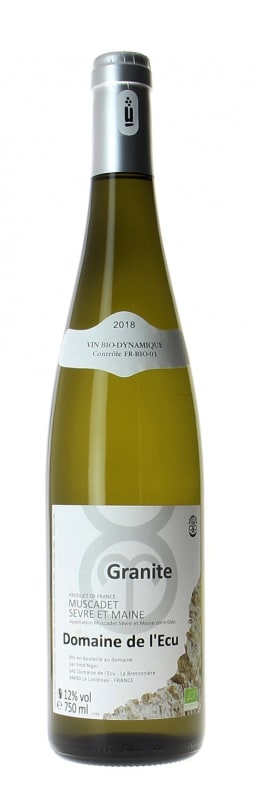


Winemaker Notes
It is the color of white gold. An elegant nose with pronounced notes of mineral, flint, silex, and notes of citrus fruits and oyster shells. The attack is sharp and straight, the mouth crystalline imparting a great purety, fresh with the ambiance of the sea; mouth slim, fleshy and complex, very salty notes and notes of chalk and citrus fruits. A wine equipped with a long life with a persistant ambiance of the sea. A wine essentially to keep....
Professional Ratings
-
Wine Enthusiast
Named after the rock upon which the vineyard sits, this wine is textured, very mineral and concentrated. Ripe apple flavors are part of this structure and tangy character. A little young it will be better from late 2019. Polaner Selections. Editors’ Choice
-
Wine Spectator
Crunchy in texture, with mouthwatering acidity running through and underscoring the white peach and lime notes. Bone-dry, showing slight grip on the well-defined finish. Drink now through 2027.


Made famous in Muscadet, a gently rolling, Atlantic-dominated countryside on the eastern edge of the Loire, Melon de Bourgogne is actually the most planted grape variety in the Loire Valley. But the best comes from Muscadet Sèvre et Maine, a subzone of Pays Nantais. Somm Secret—The wine called Muscadet may sound suggestive of “muscat,” but Melon de Bourgogne is not related. Its name also suggests origins in Burgundy, which it has, but was continuously outlawed there, like Gamay, during the 16th and 17th centuries.

The Pays Nantais, Loire’s only region abutting the Atlantic coast, is solely focused on the Melon de Bourgogne grape in its handful of subzones: Muscadet-Sèvre et Maine, Muscadet-Coteaux de la Loire and Muscadet-Côtes de Grandlieu. Muscadet wines are dry, crisp, seaside whites made from Melon de Bourgogne and are ideal for the local seafood-focused cuisine. (They are not related to Muscat.) There is a new shift in the region to make these wines with extended lees contact, creating fleshy and more aromatic versions.