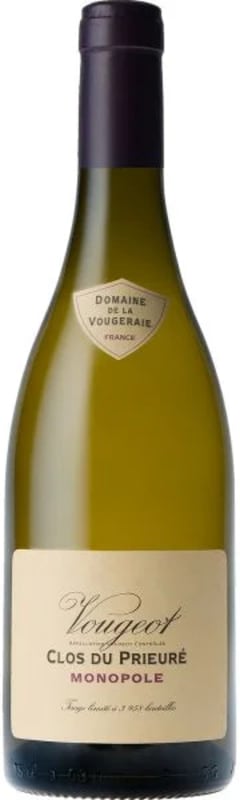


Winemaker Notes
The Clos du Prieuré (priory enclosure) belonged to the Benedictine Priory of the Abbey of Saint Germain-des-Prés in Paris, who owned land in the neighboring parish of Gilly from the 11th century. As the Abbey of Cîteaux grew, conflicts with Saint-Germain-des-Prés were inevitable. In 1499 Jean de Cirey, Abbot of Cîteaux, after selling off part of the Abbey’s crockery, finally succeeded in paying off the debt to the Parisian Abbey, which was forced to accept some land near Melun in exchange for abandoning its rights at Gilly and Vougeot.
Professional Ratings
-
Decanter
The Clos du Prieuré is within the lieu-dit Le Village. This shows ripe aromas of apple, hazelnut and spice from the ageing in Damy casks. There is a pleasantly crisp balancing acidity and nice density. Lovely. Yields were down in 2019, in part due to the ducks who ate a number of grapes.
-
Australian Wine Companion
Ripe aromas consist mostly of various white fleshed fruit that are nuanced by hints of mineral reduction and a floral top note. Once again there is a caressing mouthfeel to the delicious and vibrant if slightly less concentrated middle weight flavors that culminate in a sappy finish on the equally dry finale. This is also quite good for its level and worth a look.
Barrel Sample: 89-91


One of the most popular and versatile white wine grapes, Chardonnay offers a wide range of flavors and styles depending on where it is grown and how it is made. While it tends to flourish in most environments, Chardonnay from its Burgundian homeland produces some of the most remarkable and longest lived examples. California produces both oaky, buttery styles and leaner, European-inspired wines. Somm Secret—The Burgundian subregion of Chablis, while typically using older oak barrels, produces a bright style similar to the unoaked style. Anyone who doesn't like oaky Chardonnay would likely enjoy Chablis.

Containing the largest Grand Cru in all of the Côte d’Or, Vougeot, the village, takes its name from the small stream flowing through it, called Vouge. Over three quarters of the village retains Grand Cru status, and a single vineyard at that: Clos de Vougeot (or simply, Clos Vougeot). Its mass—over 50 ha—retains the single name chiefly for historic reasons.
But today, Clos de Vougeot contains over 80 owners and shows significant soil and slope variations within its boundaries. The top, bordering Musigny and Grands Echezeaux, is calcareous and gravelly on oolitic limestone and exhibits wonderful drainage. The middle sections are limestone, gravel and clay with less of a slope. The lower part has little slant and is mostly made of clay. Historically the diverse parcels were blended but today the abundance of owners means that everyone has his own style. Exploring and understanding them is part of the allure of Clos de Vougeot.
In general a fine Clos de Vougeot when young will be dense and dark but juicy, with a pronounced austerity, and needs a good ten years to bring it to its full potential.