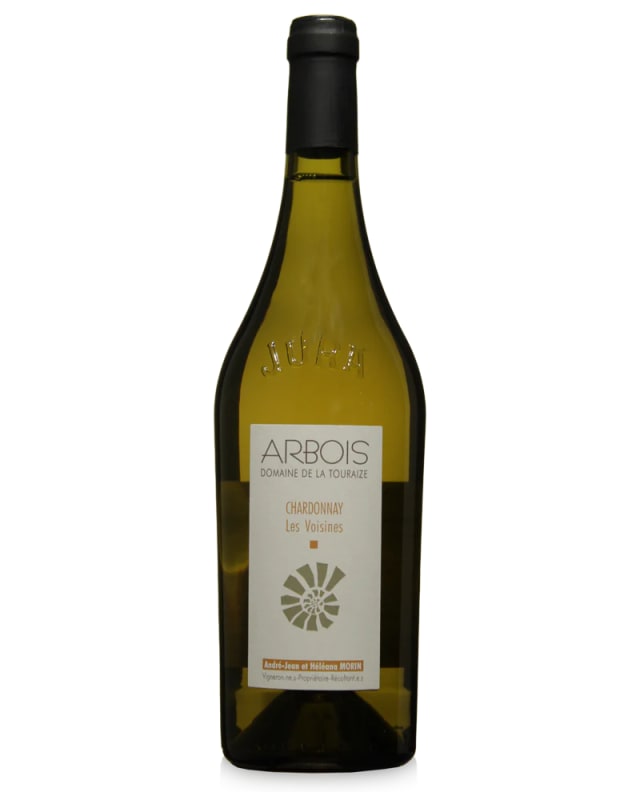


Winemaker Notes
“Les Voisines” (“the neighbors”) comes from 2.35 hectares of Chardonnay spread among four parcels in Arbois: Curoulet, En Flandre, Les Corvées, and La Platière, with soils ranging from gravelly marl to calcareous marl to blue marl. The fruit is pressed whole-cluster, undergoing alcoholic and malolactic fermentation in well-used barrels of varying sizes, where the wine spends 18 months on the fine lees and is bottled without fining or filtration, and with just 20-mg/L of sulfur added after malolactic finishes. The barrels are kept full, in the ouillé style, and the finished wine displays bristling minerality unaccented by oxidative elements. Despite its recognizable varietal character and its purity of fruit, however, this is a forcefully saline, chiseled iteration of Chardonnay that could be produced nowhere else but the Jura.


One of the most popular and versatile white wine grapes, Chardonnay offers a wide range of flavors and styles depending on where it is grown and how it is made. While it tends to flourish in most environments, Chardonnay from its Burgundian homeland produces some of the most remarkable and longest lived examples. California produces both oaky, buttery styles and leaner, European-inspired wines. Somm Secret—The Burgundian subregion of Chablis, while typically using older oak barrels, produces a bright style similar to the unoaked style. Anyone who doesn't like oaky Chardonnay would likely enjoy Chablis.

On the foothills of the Jura Mountains, just east of the Cote de Beaune on the Switzerland border, the Jura wine-producing zone is recognized for its unique reds, as well as its particular and diverse styles of whites.
Though borrowed from their neighbor Burgundy, Chardonnay and Pinot noir have been growing in Jura since the Middle Ages. But here the altitude, topography, climate and clay-rich, marl soils support a different style of Pinot noir, not to mention its other deeply-colored, full-bodied indigenous reds, Poulsard and Trousseau.
Considering area under vine, growers here favor Chardonnay for its consistency and reliability; it comprises almost half of Jura's vineyard acreage. However, Jura Chardonnay is anything but boring; its many offbeat styles are part of what make region’s wines so distinctive. It is used for Cremant (sparkling), Macvin (a fortified wine), as well as fine examples at the quality level of Burgundy.
Jura also has a unique oxidative style for Chardonnay but is better recognized for its similarly-styled “vin jaune,” meaning ‘yellow wine,’ which is made from the indigenous variety, Savagnin. Vin jaune is made using techniques similar to those used to make Sherry.
For all of its wines, Jura favors a traditional, natural and often organic style in viticulture and winemaking.