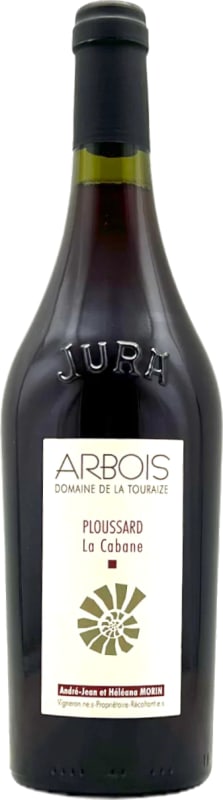


Winemaker Notes
"La Cabane" ("the shack") comes from 1.2-ha. of Ploussard in two parcels: the blue marl of Curoulet planted in the early 1980s, and the grey marl of La Touraize planted in the early 1960s. The bunches are hand-harvested and also painstakingly de-stemmed by hand. The fruit is transferred by gravity to stainless steel, where it macerates semi-carbonically for two weeks before pressing, and the wine spends six months in large used barrels before being bottled without filtration, and with just 10-mg/L of added sulfur. Remarkably pure-fruited and ethereal, "La Cabane" clocks in under 12% alcohol (A-J never chaptalizes) yet expresses immense mineral depth. In its gorgeous translucent hue, its soaring aromas of citrus zest and red apples, and its light yet persistent palate, it embodies the uniqueness of this beloved indigenous variety.
Professional Ratings
-
Wine Spectator
The delicious 2023 Arbois Ploussard La Cabane was raised for seven months in a combination of large foudres , concrete eggs and stainless-steel tanks. Vivid pomegranate, rosehip and earthy nuances are all pushed forward. . Clean and refreshing at a mere 11.5% alcohol, the 2023 is such a lovely Poulsard.


Beyond the usual suspects, there are hundreds of red grape varieties grown throughout the world. Some are indigenous specialties capable of producing excellent single varietal wines, while others are better suited for use as blending grapes. Each has its own distinct viticultural characteristics, as well as aroma and flavor profiles, offering much to be discovered by the curious wine lover. In particular, Portugal and Italy are known for having a multitude of unique varieties but they can really be found in any region.

On the foothills of the Jura Mountains, just east of the Cote de Beaune on the Switzerland border, the Jura wine-producing zone is recognized for its unique reds, as well as its particular and diverse styles of whites.
Though borrowed from their neighbor Burgundy, Chardonnay and Pinot noir have been growing in Jura since the Middle Ages. But here the altitude, topography, climate and clay-rich, marl soils support a different style of Pinot noir, not to mention its other deeply-colored, full-bodied indigenous reds, Poulsard and Trousseau.
Considering area under vine, growers here favor Chardonnay for its consistency and reliability; it comprises almost half of Jura's vineyard acreage. However, Jura Chardonnay is anything but boring; its many offbeat styles are part of what make region’s wines so distinctive. It is used for Cremant (sparkling), Macvin (a fortified wine), as well as fine examples at the quality level of Burgundy.
Jura also has a unique oxidative style for Chardonnay but is better recognized for its similarly-styled “vin jaune,” meaning ‘yellow wine,’ which is made from the indigenous variety, Savagnin. Vin jaune is made using techniques similar to those used to make Sherry.
For all of its wines, Jura favors a traditional, natural and often organic style in viticulture and winemaking.