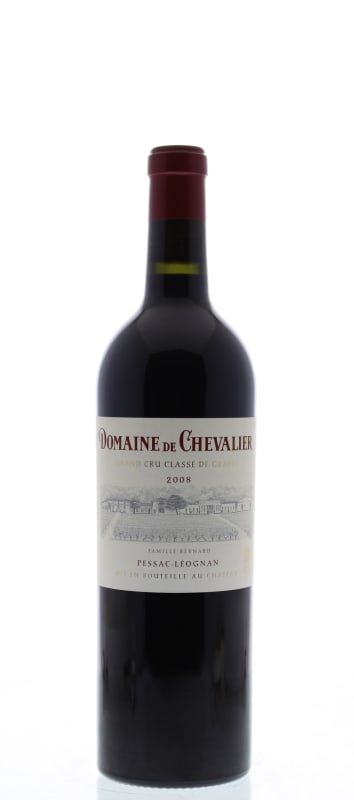


Winemaker Notes
Chevalier's red wines are well-structured with round, very fine, tight-knit tannin... They are tremendously elegant and distinguished with a very long aftertaste and more delicacy than power.
Professional Ratings
-
Wine Enthusiast
A superb wine. Oily textured, very rich, its fruit ripe. Pear, honey and yellow fruits are allid with taut acidity and light hints of wood. Likely to age over many years. Cellar Selection
-
James Suckling
Just starting now to open, with bright fruit, light smoky and meaty undertones. Medium to full body, fresh finish. Drink or hold.
-
Robert Parker's Wine Advocate
One of the fabulous sleepers of the vintage and a wine for serious Bordeaux afficionados to consider buying, the 2008 is a blend of 66% Cabernet Sauvignon, 25% Merlot and 9% Petit Verdot that achieved 13.5% natural alcohol. Surprisingly backward for a 2008, it is medium to full-bodied with moderate tannins, lots of purity and abundant charcoal, black currant and floral notes. The sweetness of the fruit, depth of flavor and textured, lush mouthfeel in this medium to full-bodied, ageworthy 2008 are impressive. Give it 3-4 years of cellaring and drink it over the following two decades. I would not be surprised if it turns out to be as impressive as the 2010.
-
Wine Spectator
Lilac, tar and cassis bush aromas are followed by a broad swath of mulled plum, black currant and maduro tobacco. The strong, mineral- and tar-filled spine drives through the finish, which picks up a smoldering edge. Drink now through 2018. 10,333 cases made.


One of the world’s most classic and popular styles of red wine, Bordeaux-inspired blends have spread from their homeland in France to nearly every corner of the New World. Typically based on either Cabernet Sauvignon or Merlot and supported by Cabernet Franc, Malbec and Petit Verdot, the best of these are densely hued, fragrant, full of fruit and boast a structure that begs for cellar time. Somm Secret—Blends from Bordeaux are generally earthier compared to those from the New World, which tend to be fruit-dominant.

Recognized for its superior reds as well as whites, Pessac-Léognan on the Left Bank claims classified growths for both—making it quite unique in comparison to its neighboring Médoc properties.
Pessac’s Chateau Haut-Brion, the only first growth located outside of the Médoc, is said to have been the first to conceptualize fine red wine in Bordeaux back in the late 1600s. The estate, along with its high-esteemed neighbors, La Mission Haut-Brion, Les Carmes Haut-Brion, Pique-Caillou and Chateau Pape-Clément are today all but enveloped by the city of Bordeaux. The rest of the vineyards of Pessac-Léognan are in clearings of heavily forested area or abutting dense suburbs.
Arid sand and gravel on top of clay and limestone make the area unique and conducive to growing Sémillon and Sauvignon blanc as well as the grapes in the usual Left Bank red recipe: Cabernet Sauvignon, Merlot, Cabernet Franc and miniscule percentages of Petit Verdot and Malbec.
The best reds will show great force and finesse with inky blue and black fruit, mushroom, forest, tobacco, iodine and a smooth and intriguing texture.
Its best whites show complexity, longevity and no lack of exotic twists on citrus, tropical and stone fruit with pronounced floral and spice characteristics.