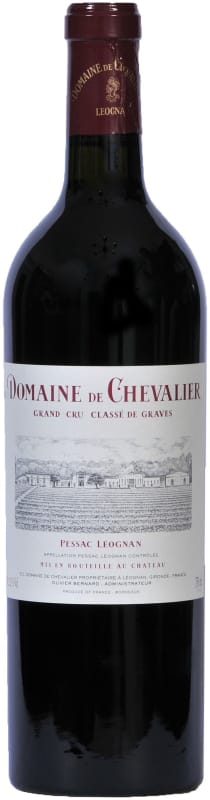


Winemaker Notes
The grapes are tripple sorted: 1st in the vines, 2nd on the complete bunch on the sorting table and 3rd by individual grapes on the sorting table. Vatting is done by gravity without pumping. Alcholic fermentation in stainless steel and coated steel temperature controlled vats. Barrel aged for 18 months.
65% Cabernet Sauvignon, 30% Merlot, 2.5% Cabernet Franc, 2.5% Petit Verdot
Professional Ratings
-
Robert Parker's Wine Advocate
A glorious wine from Domaine de Chevalier, this 2005 reveals notes of graphite, subtle charcoal, blackberry and blackcurrant fruit, a medium to full-bodied mouthfeel, silky tannins, and a long, multi-dimensional finish. This is a killer effort from the Bernard family, who own this famous terroir in Pessac-Léognan. Drink it over the next 20-30 years.
-
James Suckling
This is really pure and fruity with flowers and stones. Full and dense, but still a bit tight. Not really giving much at the moment, but beautifully balanced and silky, and opening up to a long, long finish. This is excellent. Pull the cork after 2015.
-
Wine Spectator
Displays floral, blackberry and mineral aromas, with a hint of fresh tobacco. Full-bodied, with supersilky tannins and a long, caressing finish. Has a fine, polished texture. This is a class act--the best since 1998 for the red. Best after 2012. 10,000 cases made.
-
Wine Enthusiast
This is more about elegance than power, a fresh wine with sweet fruit, and so elegant. The tannins do promise some good aging, but this is not a long-term wine. Hold for 8–10 years, but it is already a pleasure to drink.
-
Wine & Spirits
Complex in its ripe fruit flavors of licorice and sun-dried cherries, this also has earthier, vegetal tones to its substantial tannins. Those tannins were rounder and sweeter at the en primeur tastings. Now the wine is at a tense moment in its evolution, and it feels flattened by the tannins rather than extended by them. Even so, it has a sense of classical proportions that should gain precedence as the power of the tannins diminishes.


One of the world’s most classic and popular styles of red wine, Bordeaux-inspired blends have spread from their homeland in France to nearly every corner of the New World. Typically based on either Cabernet Sauvignon or Merlot and supported by Cabernet Franc, Malbec and Petit Verdot, the best of these are densely hued, fragrant, full of fruit and boast a structure that begs for cellar time. Somm Secret—Blends from Bordeaux are generally earthier compared to those from the New World, which tend to be fruit-dominant.

Recognized for its superior reds as well as whites, Pessac-Léognan on the Left Bank claims classified growths for both—making it quite unique in comparison to its neighboring Médoc properties.
Pessac’s Chateau Haut-Brion, the only first growth located outside of the Médoc, is said to have been the first to conceptualize fine red wine in Bordeaux back in the late 1600s. The estate, along with its high-esteemed neighbors, La Mission Haut-Brion, Les Carmes Haut-Brion, Pique-Caillou and Chateau Pape-Clément are today all but enveloped by the city of Bordeaux. The rest of the vineyards of Pessac-Léognan are in clearings of heavily forested area or abutting dense suburbs.
Arid sand and gravel on top of clay and limestone make the area unique and conducive to growing Sémillon and Sauvignon blanc as well as the grapes in the usual Left Bank red recipe: Cabernet Sauvignon, Merlot, Cabernet Franc and miniscule percentages of Petit Verdot and Malbec.
The best reds will show great force and finesse with inky blue and black fruit, mushroom, forest, tobacco, iodine and a smooth and intriguing texture.
Its best whites show complexity, longevity and no lack of exotic twists on citrus, tropical and stone fruit with pronounced floral and spice characteristics.