
Winemaker Notes
Professional Ratings
-
Robert Parker's Wine Advocate
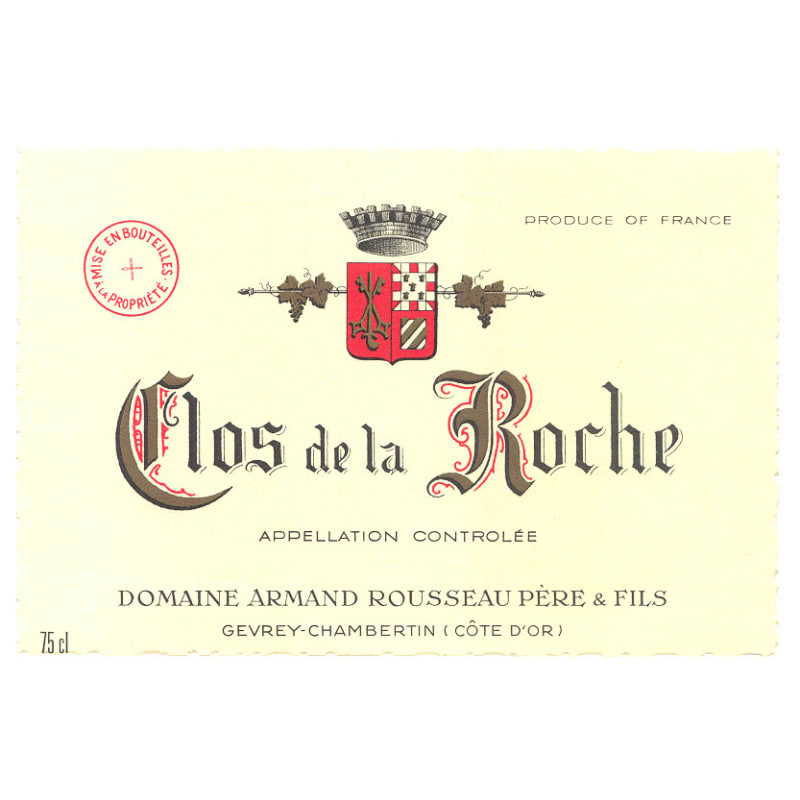
Nutmeg, coriander, and fresh sour cherry aromas on the nose of Rousseau's 2006 Clos de La Roche usher in a fascinating palate, pungently spicy, tartly-fruited, and backed by an alkaline, saline, very marine sense of mineral abundance. The smoky, stony, and bitter-sweet elements in common with so many wines of this collection here steer clear of austerity thanks to the wine's sheer primary juiciness and the invigorative potential of its distinctive minerality. If tasted blind, I might well have picked it as a rarified expression of Clos St.-Denis. I expect this will be worth savoring over the next 6-8 years, but given the relative delicacy of its frame, I would want to monitor its evolution in case it seems a shame not to enjoy it sooner.


Thin-skinned, finicky and temperamental, Pinot Noir is also one of the most rewarding grapes to grow and remains a labor of love for some of the greatest vignerons in Burgundy. Fairly adaptable but highly reflective of the environment in which it is grown, Pinot Noir prefers a cool climate and requires low yields to achieve high quality. Outside of France, outstanding examples come from in Oregon, California and throughout specific locations in wine-producing world. Somm Secret—André Tchelistcheff, California’s most influential post-Prohibition winemaker decidedly stayed away from the grape, claiming “God made Cabernet. The Devil made Pinot Noir.”

The origin of perhaps the world’s very finest Pinot Noir, Côte de Nuits is the northern half of the Côte d'Or and includes the famous wine villages of Gevrey-Chambertin, Morey-St-Denis, Chambolle-Musigny, Vougeot, Vosne-Romanée, Flagey-Echezeaux and Nuits-St-Georges.
Fine whites from Chardonnay are certainly found in the Côte de Nuits, but with much less frequency than top-performing reds made of Pinot noir. The little village of Nuits-St-Georges in its southern end gave the region its name: Côte de Nuits. The city of Dijon marks its northern border.