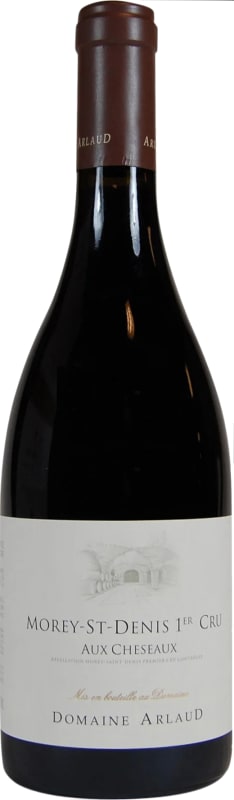


Winemaker Notes
The Cheseaux name come from the Latin casale, land for building, a term used at the Gallic-Roman time. It stands generally for ruin witch the stones remain. The origin is the same for Echezeaux et Grand Echezeaux. The bedrock disaggregation created a marne lime-clay amalgam of white rocks.
Located in the northern limit of the village abutting the Gevrey-Chambertin bordure. Aux Cheseaux make delicate fruity, long and elegant wines.
Professional Ratings
-
Vinous
The 2021 Morey-Saint-Denis Aux Chesaux 1er Cru has a slight reduction on the nose, blacker fruit here, superb mineralité and precision. The palate is surfeit with finesse, beautifully balanced with a poised and satisfying, silky smooth finish. Superb.
Barrel Sample: 93-95 -
Jasper Morris
The fullest purple colour to date, among the Arlaud 2021s, with a ripe succulent dark red fruit and a touch more oak. A mild reduction, behind which I did not pick up any whole bunch effect. All in red fruit with an excellent graceful texture, just a light tannin or two at the back and very persistent. Drink from 2026-2031.
Barrel Sample: 91-93


Thin-skinned, finicky and temperamental, Pinot Noir is also one of the most rewarding grapes to grow and remains a labor of love for some of the greatest vignerons in Burgundy. Fairly adaptable but highly reflective of the environment in which it is grown, Pinot Noir prefers a cool climate and requires low yields to achieve high quality. Outside of France, outstanding examples come from in Oregon, California and throughout specific locations in wine-producing world. Somm Secret—André Tchelistcheff, California’s most influential post-Prohibition winemaker decidedly stayed away from the grape, claiming “God made Cabernet. The Devil made Pinot Noir.”

While Morey-St-Denis of Burgundy might not get the same attention as its neighbors, Gevrey-Chambertin to the north and Chambolle-Musigny to the south, there is no reason why it shouldn’t. The same line of limestone runs from the Combe de Lavaux in Gevrey—all the way through Morey—ending in Chambolle.
There are four grand cru vineyards, moving southwards from the border with Gevrey-Chambertin: Clos de la Roche, Clos St-Denis, Clos des Lambrays, Clos de Tart and a small segment of Bonnes-Mares overlapping from Chambolle. Clos de la Roche is probably the finest vineyard, giving wines of true depth, body, and sturdiness for the long haul than most other vineyards.
Pinot Noir from Morey-St-Denis is known for its deep red cherry, blackcurrant and blueberry fruit. Aromas of spice, licorice and purple flowers are present in the wines’ youth, evolving to forest and game as the wine ages.