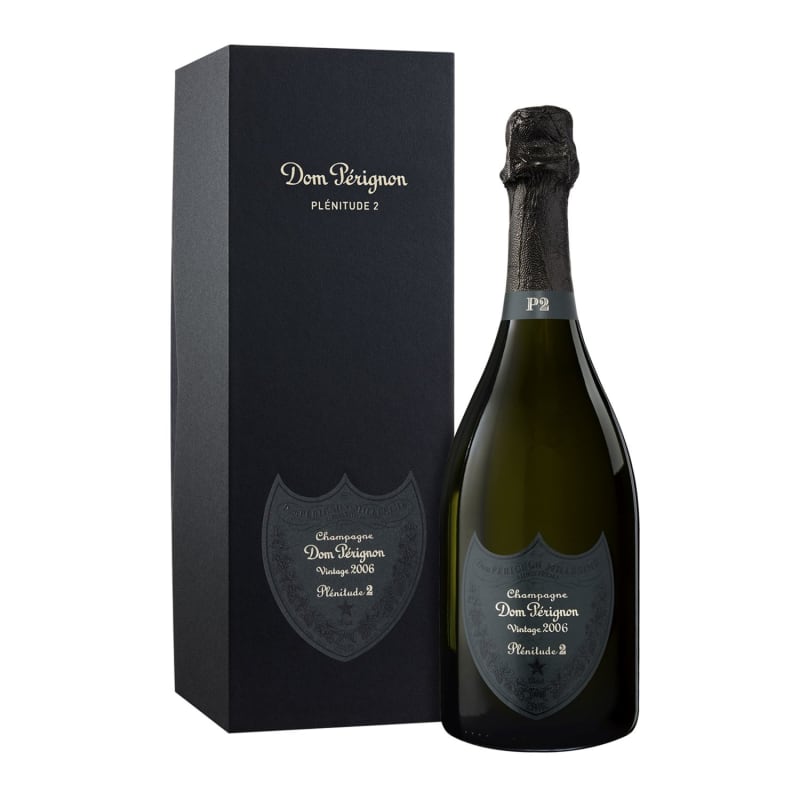


Winemaker Notes
Dom Pérignon Vintage 2006 Plénitude 2 reveals a soft, warm and reassuring sweet bouquet, rich in subtle nuances. Its aromatic profile boasts a remarkable finesse with floral and mineral tones. This composition rapidly unfolds to reveal delicate notes of wild peach, citron, calisson and mocha, creating a unique and memorable experience on the nose.
The palate of Dom Pérignon 2006 is full-bodied, both restrained and tender, developing into a thick texture that gradually becomes firmer. The complexity of the wine increases, revealing a subtly saline nuance. On the finish, an exquisite bitterness and wonderful maturity prevail, enriched by deep aromas of dried fruit, cocoa and toasted hazelnut, which blend harmoniously to offer an exceptional wine tasting experience.
Dom Pérignon Vintage 2006 Plénitude 2 is distinguished by its soft, warm character, ideally expressed when paired with seafood such as langoustine and scallops. This wine pairing harmony continues with veal and Jerusalem artichoke dishes, which highlight its delicate, enveloping nature. The flavours are further enhanced by herbs such as rosemary and basil, while hints of acidity from lemon and bergamot fully reveal its breadth and refined structure. This vintage illustrates Dom Pérignon’s ability to create fine wines that capture and enhance the essence of the ingredients with which they are served.
Blend: 55% Pinot Noir, 45% Chardonnay
Professional Ratings
-
Vinous
The 2006 Dom Perignon P2 is magnificent. Rich and soaring in its intensity, the P2 is absolutely stunning. What comes through most is the style of the year more than the style of the P2 series. Tangerine, apricot, mint, white pepper, passion fruit and spice all race out of the glass. The ripeness of the year is evident, but all the elements are so masterfully balanced. The balance of exoticness and freshness is just mind-blowing.
-
Wine Spectator
A blonde bombshell of a Champagne, hedonistic with its alluring brioche, creamed cherry and glazed tangerine flavors that show embellishments of fragrant saffron, candied ginger, fennel seed and vanilla, yet there's lovely definition and focus via the racy, lemon-infused acidity and plush texture. Long and minerally on the finish, with the rich profile joined by a subtle undertow of smoke, oyster shell and brine. Drink now through 2040.
-
Decanter
The P2 late-release concept does seem to work wonders with riper, heavier vintages, and 2006 is no exception. The sheer fruitiness of orange confit, juicy stone fruit, mango and roasted citrus has quietened a little into an integrated, honeyed and voluptuous whole, marked with ground coffee and baklava decadence of age yet held in check with a bitter citric snap, charry smokiness and a lick of tannic firmness rather than acidity.
-
Robert Parker's Wine Advocate
The 2006 Dom Pérignon P2, crafted from a blend of 55% Pinot Noir and 45% Chardonnay with a modest dosage of 4.5 grams, is presenting exceptionally well at this stage. It unfurls a complex, deep bouquet of smoke, ripe orchard fruits, mango, exotic fruits and spices. Medium to full-bodied, rich and expressive, it’s harmonious and enveloping and has gained structure and tension compared to the initial 2006 Dom Pérignon, while the palate is perfectly balanced with delicate gastronomic bitterness and chalky dry extracts that contribute to its long, mineral-driven finish. It should go well with delicate fare. P2 is the acronym for the Plénitude 2 series, Dom Pérignon’s second life, indicating that bottles are kept by the house to let them age on the lees and to obtain different expressions of the same wine throughout its life, letting time work its magic and thus acquiring additional complexity.
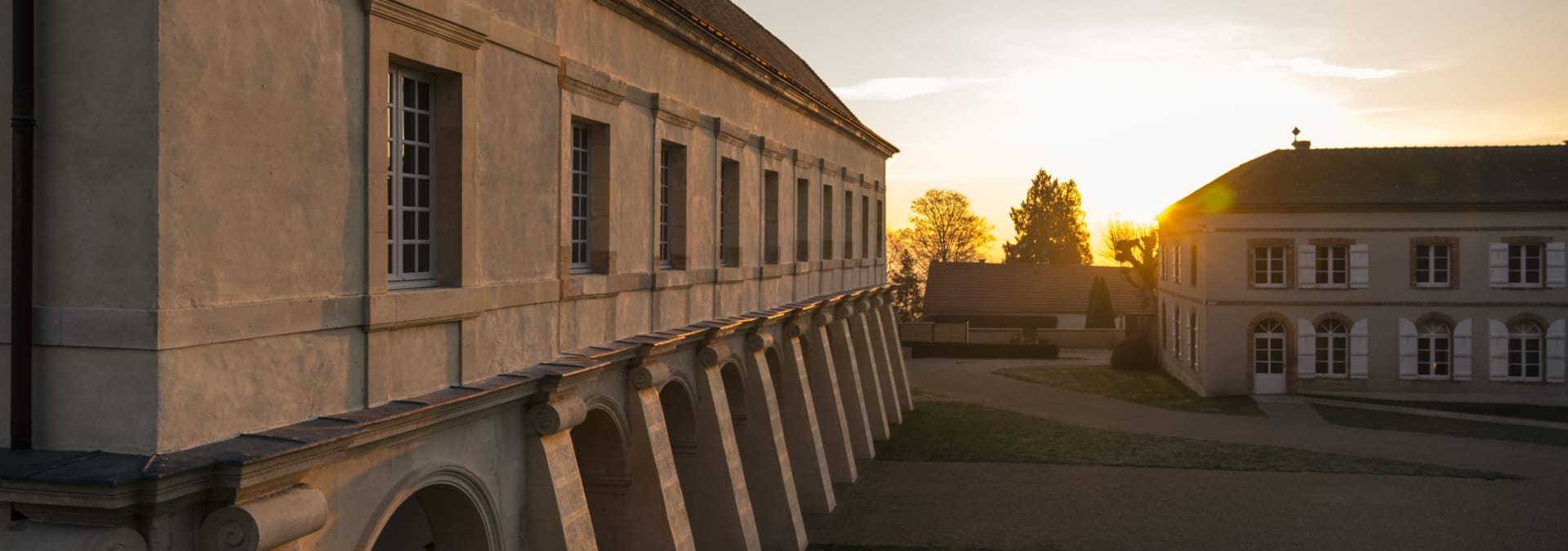



Dom Pérignon: an absolute commitment to Vintage
Dom Pérignon's commitment to vintage is absolute. Each Dom Pérignon is a true act of creation, made from only the best grapes. The champagne's intensity is based in precision, so inviting, so mysterious. Each Vintage has three Plénitudes, and embodies the total faith in the creation that is constantly renewed by Chef de Cave Vincent Chaperon. Coupled with a bold sense of playfulness, Dom Pérignon inspires the greatest creators in the world.Made only from the best grapes grown in one single year, each Dom Perignon's Vintage represents a harmonic balance between the nature of the year and the signature of Dom Pérignon. After no fewer than 8 years of elaboration, each vintage emerges complete, seamless and tactile. Dom Pérignon Champagne is made through an assemblage of Pinot Noir and Chardonnay, created by using only the best grapes harvested from the 17 Grands Crus in Champagne and the Premier Cru of Hautvillers.

Representing the topmost expression of a Champagne house, a vintage Champagne is one made from the produce of a single, superior harvest year. Vintage Champagnes account for a mere 5% of total Champagne production and are produced about three times in a decade. Champagne is typically made as a blend of multiple years in order to preserve the house style; these will have non-vintage, or simply, NV on the label. The term, "vintage," as it applies to all wine, simply means a single harvest year.

Associated with luxury, celebration, and romance, the region, Champagne, is home to the world’s most prized sparkling wine. In order to bear the label, ‘Champagne’, a sparkling wine must originate from this northeastern region of France—called Champagne—and adhere to strict quality standards. Made up of the three towns Reims, Épernay, and Aÿ, it was here that the traditional method of sparkling wine production was both invented and perfected, birthing a winemaking technique as well as a flavor profile that is now emulated worldwide.
Well-drained, limestone and chalky soil defines much of the region, which lend a mineral component to its wines. Champagne’s cold, continental climate promotes ample acidity in its grapes but weather differences from year to year can create significant variation between vintages. While vintage Champagnes are produced in exceptional years, non-vintage cuvées are produced annually from a blend of several years in order to produce Champagnes that maintain a consistent house style.
With nearly negligible exceptions, . These can be blended together or bottled as individual varietal Champagnes, depending on the final style of wine desired. Chardonnay, the only white variety, contributes freshness, elegance, lively acidity and notes of citrus, orchard fruit and white flowers. Pinot Noir and its relative Pinot Meunier, provide the backbone to many blends, adding structure, body and supple red fruit flavors. Wines with a large proportion of Pinot Meunier will be ready to drink earlier, while Pinot Noir contributes to longevity. Whether it is white or rosé, most Champagne is made from a blend of red and white grapes—and uniquely, rosé is often produce by blending together red and white wine. A Champagne made exclusively from Chardonnay will be labeled as ‘blanc de blancs,’ while ones comprised of only red grapes are called ‘blanc de noirs.’