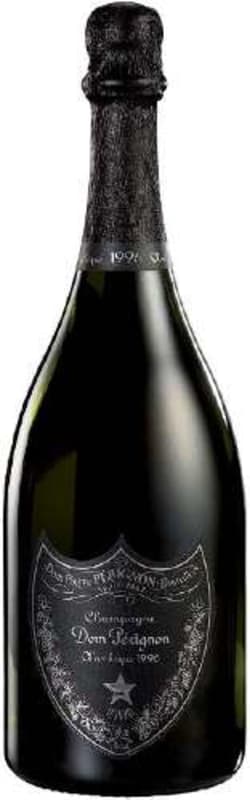

Winemaker Notes
On the nose the wine displays praline, which rapidly combines with citrus and dried figs. Darker underlying iodine and peaty notes also emerge.
On the palate, there is an apparent paradox, with concentration and movement vying for ascendancy. The structure of the wine is tense and assertive. Its energy, almost tactile, is contained for a moment before vibrating and exploding. Its opulence then becomes superbly persistent, trenchant and persuasive.
Professional Ratings
-
Wine Enthusiast
A magnificent Champagne, one that is light, delicate, yet packed with character. It is beautifully balanced, with a bone-dry character, just softened by the toastiness that is developing. Expect this to age for many years.
-
Robert Parker's Wine Advocate
The 1996 Dom Perignon Oenotheque offers up layers of pastry, lemon, smoke and toastiness. At first deceptively understated, the wine turns positively explosive and layered on the palate, showing remarkable tension, elegance and power, all wrapped around a seriously intense frame. The balance between fruit and acidity is awesome. This is a marvelous DP Oeno. The Oeno is the same juice as the regular Dom Perignon, except the Oeno is aged on the cork while the regular DP is aged in crown-sealed bottles. Once disgorged, the Oenos gets a slightly lower dosage than is typical for the original release DP. This bottle was disgorged in 2008. Anticipated maturity: 2012-2026.
-
Wine & Spirits
This transforms the violent power of 1996 into a supple and succulent wine, holding the masculine tension of the vintage while yielding more delicate complexities: orange peel, cedar, ginger, tobacco. The wine's refinement is extraordinary, the sumptuous richness girded into a gentle, sunny finish that lives in the memory after lingering for minutes on the lips. A youthful classic that shows no signs of its 16 years of age, this should live for decades.
-
Wine Spectator
The Brut Cuvée Dom Pérignon Oenothèque 1996 ($350) will debut in July. Its complexity was immediately apparent on the bouquet, offering butterscotch, toast and mineral elements. An extremely well-balanced '96, without the high-acid profile of the vintage, the flavors evoked candied citrus, seashore and smoke, reminding me of a great Corton-Charlemagne (96, non-blind).



Dom Pérignon: an absolute commitment to Vintage
Dom Pérignon's commitment to vintage is absolute. Each Dom Pérignon is a true act of creation, made from only the best grapes. The champagne's intensity is based in precision, so inviting, so mysterious. Each Vintage has three Plénitudes, and embodies the total faith in the creation that is constantly renewed by Chef de Cave Vincent Chaperon. Coupled with a bold sense of playfulness, Dom Pérignon inspires the greatest creators in the world.Made only from the best grapes grown in one single year, each Dom Perignon's Vintage represents a harmonic balance between the nature of the year and the signature of Dom Pérignon. After no fewer than 8 years of elaboration, each vintage emerges complete, seamless and tactile. Dom Pérignon Champagne is made through an assemblage of Pinot Noir and Chardonnay, created by using only the best grapes harvested from the 17 Grands Crus in Champagne and the Premier Cru of Hautvillers.

Representing the topmost expression of a Champagne house, a vintage Champagne is one made from the produce of a single, superior harvest year. Vintage Champagnes account for a mere 5% of total Champagne production and are produced about three times in a decade. Champagne is typically made as a blend of multiple years in order to preserve the house style; these will have non-vintage, or simply, NV on the label. The term, "vintage," as it applies to all wine, simply means a single harvest year.

Associated with luxury, celebration, and romance, the region, Champagne, is home to the world’s most prized sparkling wine. In order to bear the label, ‘Champagne’, a sparkling wine must originate from this northeastern region of France—called Champagne—and adhere to strict quality standards. Made up of the three towns Reims, Épernay, and Aÿ, it was here that the traditional method of sparkling wine production was both invented and perfected, birthing a winemaking technique as well as a flavor profile that is now emulated worldwide.
Well-drained, limestone and chalky soil defines much of the region, which lend a mineral component to its wines. Champagne’s cold, continental climate promotes ample acidity in its grapes but weather differences from year to year can create significant variation between vintages. While vintage Champagnes are produced in exceptional years, non-vintage cuvées are produced annually from a blend of several years in order to produce Champagnes that maintain a consistent house style.
With nearly negligible exceptions, . These can be blended together or bottled as individual varietal Champagnes, depending on the final style of wine desired. Chardonnay, the only white variety, contributes freshness, elegance, lively acidity and notes of citrus, orchard fruit and white flowers. Pinot Noir and its relative Pinot Meunier, provide the backbone to many blends, adding structure, body and supple red fruit flavors. Wines with a large proportion of Pinot Meunier will be ready to drink earlier, while Pinot Noir contributes to longevity. Whether it is white or rosé, most Champagne is made from a blend of red and white grapes—and uniquely, rosé is often produce by blending together red and white wine. A Champagne made exclusively from Chardonnay will be labeled as ‘blanc de blancs,’ while ones comprised of only red grapes are called ‘blanc de noirs.’