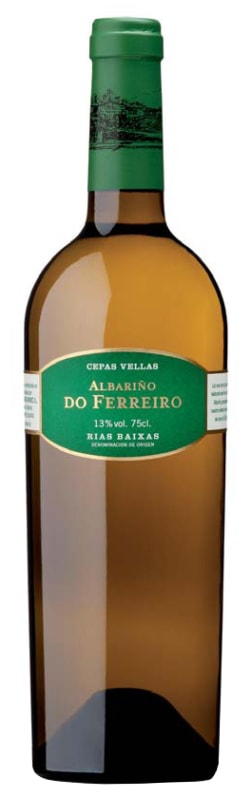


Winemaker Notes
This special albariño from Do Ferreiro is sourced from vines in the Salnes Valley that are over 200 years old. The grapes are de-stemmed and cold-soaked for 5 hours before fermentation. Fermentation with indigenous yeasts occurs in stainless steel tanks, followed by 11 months aging on the lees.
Professional Ratings
-
Robert Parker's Wine Advocate
There is another phenomenal vintage in the 2017 Albariño Cepas Vellas. This is a very regular vineyard that delivers very complex wines year in, year out, and according to Manuel Méndez, "in difficult years, it behaves better than any other vineyard." We're talking about ancient, ungrafted, pergola-trained vines around the winery—1.5 hectares of gnarled, incredible vines that are up to 150 years of age. This is very complete, and there is a touch more complexity and depth when tasted next to the 2016. The nose is quite similar and is both undeveloped and young, with notes of freshly cut grass, white flowers and wet granite. It has an electric palate with tasty flavors and a saline, tasty finish. This should make beautiful old bones. I tasted the 2011 next to it, and this wine has years ahead of it. 8,000 bottles were filled in September 2018.
-
Wine & Spirits
The sandy granite soils of Salnés have sustained a few small parcels of ancient vines, that soil protecting their roots from the ravages of phylloxera. Gerardo Méndez farms one of those blocks, 2.5 acres of vines he estimates to be 200 years old. They are trained high off the ground to keep the bunches dry, exposed to what sun and wind might counter the coastal rains. And they produce a wine with astonishing concentration of flavor, spicy and layered in its earthiness, notes of fennel in a lasting dynamic between scents of fresh pear and baked golden apple. It’s rare to find a white wine with this much flavor intensity, as well as sheer grace.


Bright and aromatic with distinctive floral and fruity characteristics, Albariño has enjoyed a surge in popularity and an increase in plantings over the last couple of decades. Thick skins allow it to withstand the humid conditions of its homeland, Rías Baixas, Spain, free of malady, and produce a weighty but fresh white. Somm Secret—Albariño claims dual citizenship in Spain and Portugal. Under the name Alvarinho, it thrives in Portugal’s northwestern Vinho Verde region, which predictably, borders part of Spain’s Rías Baixas.

Named after the rías, or estuarine inlets, that flow as far as 20 miles inland, Rías Baixas is an Atlantic coastal region with a cool and wet maritime climate. The entire region claims soil based on granite bedrock, but the inlets create five subregions of slightly different growing environments for its prized white grape, Albariño.
Val do Salnés on the west coast is said to be the birthplace of Albariño; it is the coolest and wettest of all of the regions. Having been named as the original subregion, today it has the most area under vine and largest number of wineries.
Ribeira do Ulla in the north and inland along the Ulla River is the newest to be included. It is actually the birthplace of the Padrón pepper!
Soutomaior is the smallest region and is tucked up in the hills at the end of the inlet called Ria de Vigo. Its soils are light and sandy over granite.
O Rosal and Condado do Tea are the farthest south in Rías Baixas and their vineyards actually cover the northern slopes of the Miño River, facing the Vinho Verde region in Portugal on its southern bank.
Albariño gives this region its fame and covers 90% of the area under vine. Caiño blanco, Treixadura and Loureira as well as occasionally Torrontés and Godello are permitted in small amounts in blends with Albariño. Red grapes are not very popular but Mencía, Espadeiro and Caiño Tinto are permitted and grown.