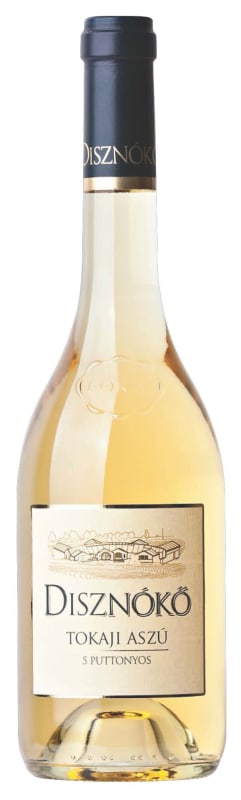


Winemaker Notes
Golden amber, the nose bursts with intensity of fresh fruits, apricot and citrus aromas. A beautiful balance between vivacious acidity and sweetness. The Disznóko Tokaji Aszú 5 Puttonyos tastes fresh and is always superbly complex and focused. Amazing length, with a slightly spicy finish.
Professional Ratings
-
Wine Enthusiast
This Tokaji is dark amber in color, with aromas of honeysuckle, peach and acacia flower. In the mouth there are flavors of clover honey, pear and baked sweet apples. Acidity is well balanced to the amount of sweetness.
-
James Suckling
This is a great introduction to Tokaji Aszu at the beginning of its (very long) ideal drinking window. Stunning nose of lemon curd, dried peach and candied pineapple. Rich and creamy with a touch of marzipan character, but more importantly bright acidity and fine tannins that makes this so invigorating. Spot-on balance through the very long and bright finish. A blend of 75% furmint, 15% zeta and 10% harslevelu. Sustainable.
-
Wine Spectator
Round and creamy, with hints of praline and vanilla-infused pastry cream enriching the poached apricot, glazed clementine and candied ginger flavors. Features a citrus peel acidity that keeps this well-balanced and refreshed on the spiced finish. Drink now through 2028. 6,000 cases made, 500 cases imported.


Apart from the classics, we find many regional gems of different styles.
Late harvest wines are probably the easiest to understand. Grapes are picked so late that the sugars build up and residual sugar remains after the fermentation process. Ice wine, a style founded in Germany and there referred to as eiswein, is an extreme late harvest wine, produced from grapes frozen on the vine, and pressed while still frozen, resulting in a higher concentration of sugar. It is becoming a specialty of Canada as well, where it takes on the English name of ice wine.
Vin Santo, literally “holy wine,” is a Tuscan sweet wine made from drying the local white grapes Trebbiano Toscano and Malvasia in the winery and not pressing until somewhere between November and March.
Rutherglen is an historic wine region in northeast Victoria, Australia, famous for its fortified Topaque and Muscat with complex tawny characteristics.

Best known for lusciously sweet dessert wines but also home to distinctive dry whites and reds, Hungary is an exciting country at the crossroads of tradition and innovation. Mostly flat with a continental climate, Hungary is almost perfectly bisected by the Danube River (known here as the Duna), and contains central Europe’s largest lake, Balaton. Soil types vary throughout the country but some of the best vines, particularly in Tokaj, are planted on mineral-rich, volcanic soil.
Tokaj, Hungary’s most famous wine region, is home to the venerated botrytized sweet wine, Tokaji, produced from a blend of Furmint and Hárslevelű. Dry and semi-dry wines are also made in Tokaj, using the same varieties. Other native white varieties include the relatively aromatic and floral, Irsai Olivér, Cserszegi Fűszeres and Királyleányka, as well as the distinctively smoky and savory, Juhfark. Common red varieties include velvety, Pinot Noir-like Kadarka and juicy, easy-drinking Kékfrankos (known elsewhere as Blaufränkisch).