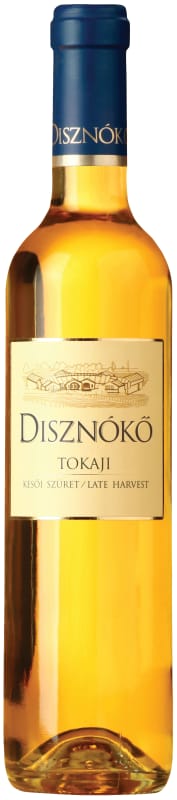


Winemaker Notes
For this wine, the winery selected entirely botrytized bunches from the end of October until mid-November. The grapes were de-stemmed, followed by skin contact with the must and fermentation in stainless steel tanks. The wine was then aged for 10-12 months in 225 liter oak barrels before bottling.
Professional Ratings
-
Wine & Spirits
This wine refutes the generally held notion that late-harvest Tokaji is never as profound as an aszú variation. “It’s transporting,” said one of our panelists, pulling out of a reverie involving wildflower fields and honeybees buzzing while the sun sets in a blaze of gold…It might not evoke the same images for everyone, but there’s undeniable pleasure in its smoky, spicy golden-fruit flavors and velvety, mouth-filling texture, and in how the citrusy acidity manages to keep the wine simultaneously buoyant. The flavors last in a warm afterglow of red-blushed flavor and earth, furmint’s fiery side rendered with beauty.


Apart from the classics, we find many regional gems of different styles.
Late harvest wines are probably the easiest to understand. Grapes are picked so late that the sugars build up and residual sugar remains after the fermentation process. Ice wine, a style founded in Germany and there referred to as eiswein, is an extreme late harvest wine, produced from grapes frozen on the vine, and pressed while still frozen, resulting in a higher concentration of sugar. It is becoming a specialty of Canada as well, where it takes on the English name of ice wine.
Vin Santo, literally “holy wine,” is a Tuscan sweet wine made from drying the local white grapes Trebbiano Toscano and Malvasia in the winery and not pressing until somewhere between November and March.
Rutherglen is an historic wine region in northeast Victoria, Australia, famous for its fortified Topaque and Muscat with complex tawny characteristics.

Best known for lusciously sweet dessert wines but also home to distinctive dry whites and reds, Hungary is an exciting country at the crossroads of tradition and innovation. Mostly flat with a continental climate, Hungary is almost perfectly bisected by the Danube River (known here as the Duna), and contains central Europe’s largest lake, Balaton. Soil types vary throughout the country but some of the best vines, particularly in Tokaj, are planted on mineral-rich, volcanic soil.
Tokaj, Hungary’s most famous wine region, is home to the venerated botrytized sweet wine, Tokaji, produced from a blend of Furmint and Hárslevelű. Dry and semi-dry wines are also made in Tokaj, using the same varieties. Other native white varieties include the relatively aromatic and floral, Irsai Olivér, Cserszegi Fűszeres and Királyleányka, as well as the distinctively smoky and savory, Juhfark. Common red varieties include velvety, Pinot Noir-like Kadarka and juicy, easy-drinking Kékfrankos (known elsewhere as Blaufränkisch).